
Amazon affiliate links - we earn a commission.Affiliate disclosure

Buying guide · 11 min read · Updated 2026-11-21

Best Yoga Mats (2026)

Six yoga mats compared on thickness, density, length, grip and material, with honest picks for studio practice, floor workouts and joint cushioning at home.

Brianna Cole, Lead Product EditorBy Brianna ColeLead Product Editor6 picks comparedSpec-sheet verified
Best Yoga Mats

At a glance

Our top picks

Side by side

Spec comparison

PieceThicknessDensitySizeMaterialIncludes
Manduka PRO 6 mm High-Density Yoga and Pilates MatBest OverallManduka PRO 6 mm High-Density Yoga and Pilates Mat6 mmHigh-density cushionn/an/an/a
Manduka PROlite 4.7 mm Yoga Mat, 71 by 24 inBest Lighter Travel PickManduka PROlite 4.7 mm Yoga Mat, 71 by 24 in4.7 mmHigh-density cushion71 by 24 inn/an/a
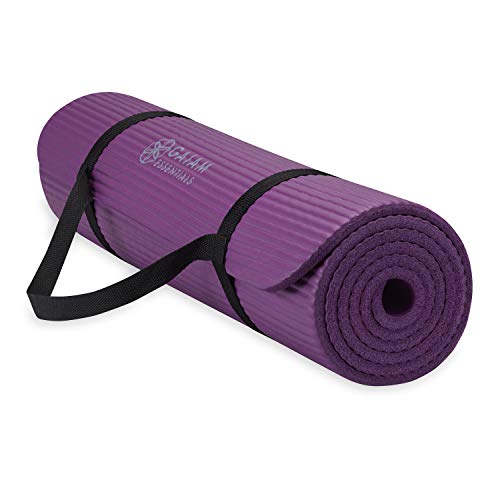
Gaiam Essentials Thick Yoga Mat 10 mm with Easy-Cinch StrapBest Value Thick MatGaiam Essentials Thick Yoga Mat 10 mm with Easy-Cinch Strap10 mmn/an/aLow-odor NBR foamEasy-Cinch carrier strap
Amazon Basics 1/2 Inch Extra Thick Exercise Yoga Mat, 74 by 24 inBest for Taller UsersAmazon Basics 1/2 Inch Extra Thick Exercise Yoga Mat, 74 by 24 in1/2 inn/a74 by 24 inNBR foamCarrying strap
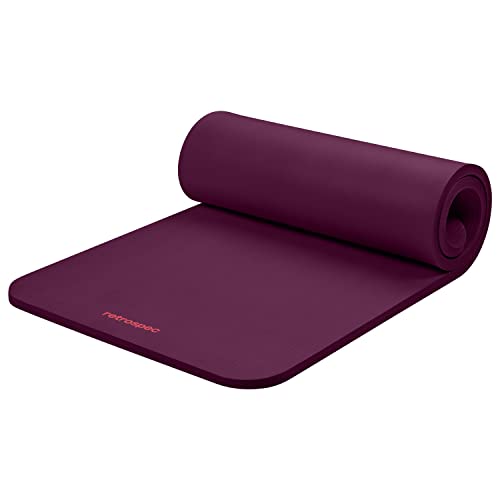
Retrospec Solana 1 Inch Extra Thick Yoga Mat with StrapBest Extra-Thick CushionRetrospec Solana 1 Inch Extra Thick Yoga Mat with Strap1 inn/a72 by 24 inn/aCarrying strap
CAP 1/2 Inch Thick NBR Yoga Mat with Strap, 68 by 24 inBest Budget PickCAP 1/2 Inch Thick NBR Yoga Mat with Strap, 68 by 24 in1/2 inHigh-density foam (listing)68 by 24 inLatex-free NBR foamStrap

A yoga mat gives you a defined, grippy surface that keeps hands and feet from sliding and softens the floor beneath your knees and spine. The right mat depends on the floor, the style of practice and how much cushioning you want.

Thickness is the biggest trap. A thick, squishy mat feels kind to joints but makes balance poses wobble, while a thin, dense mat feels firm and stable. Understanding that tradeoff matters more than any brand name.

Before you buy

6 Criteria to Look For Before Buying a Yoga Mat

  1. 01

    Thickness and stability

    Thickness trades cushion against balance. A dense 4.7 to 6 mm mat like the Manduka PROlite or PRO feels firm and stable for standing poses, while a 10 mm to one-inch mat like the Gaiam Essentials or Retrospec Solana is kinder to joints but wobbly. Buyers often pick the thickest mat and then struggle with balance, so choose by the poses you do most.

  2. 02

    Material and density

    NBR foam, used in the Gaiam, Amazon Basics and CAP mats, is soft, light and inexpensive but compresses over time. Dense closed-cell mats like the Manduka PRO hold their shape and wipe clean. If you practice several times a week, density pays back over years, while for occasional use foam is fine.

  3. 03

    Length and width

    Standard width is 24 inches, and length ranges from the CAP at 68 inches to the Amazon Basics at 74 inches. Taller users should aim for at least 72 to 74 inches so hands and feet stay on the mat in long poses. A short mat is a common mistake that people only notice in downward dog.

  4. 04

    Grip and surface

    Grip depends on the surface texture and the material. Dense mats can be slick until broken in, while foam mats rely on a textured top that can be slippery when sweaty. A towel on top can help in hot practice, but a non-slip underside matters just as much, as on the Manduka PRO dot pattern.

  5. 05

    Weight and portability

    Dense mats are heavier, which is annoying if you carry the mat daily. The PROlite is lighter than the PRO, and foam mats like the Amazon Basics are lighter still. A strap, included with most mats here, helps carrying a rolled mat on a commute.

  6. 06

    Care and lifespan

    Foam mats flatten where hands and knees land and need replacing every year or two with regular use. Dense mats last much longer but need wiping after sweat. Check whether the material is latex-free if you have a sensitivity, as on the CAP mat.

Detailed reviews

The 6 best yoga mats, explained

01
Manduka PRO 6 mm High-Density Yoga and Pilates Mat
6 mm thickHigh densityDot undersideLifetime claim
Check price on Amazon
Best for: Regular practitioners who want a dense, stable mat that lasts for years.

The Manduka PRO is built around a dense six-millimeter cushion that the maker describes as floor-like stable and unusually long-lived. A dot pattern on the bottom layer is intended to keep the mat from creeping on hard floors, and the listing leans on a lifetime-durability positioning. It is a mat designed to be rolled out daily for years rather than replaced when the foam fades.

The tradeoff is cost and the break-in. Dense closed-cell mats are famously slick when new and need a few weeks of use before grip settles, and the mat is also heavier and stiffer than thin foam, which matters if you carry it to class. Compared with the Manduka PROlite at 4.7 mm, the PRO gives more knee and wrist cushioning at the price of weight. It is also much firmer than the Gaiam Essentials 10 mm, which gives a stable platform for balance poses.

In ownership, the mat is low-maintenance. Wipe it with a damp cloth, let it dry flat and avoid leaving it in hot cars. Because the surface is not porous, sweat sits on top, so wipe it down after hot sessions, and expect the early slipperiness to fade with use.

What works

  • Dense 6 mm cushion gives a stable platform for standing and balance poses
  • Dot pattern underside helps keep the mat from creeping on hard floors
  • Durable build is aimed at daily use for years rather than seasons
  • Closed surface wipes clean and does not trap sweat inside the foam

Watch out for

  • New mats are slick until they break in over several weeks of use
  • Heavier and stiffer than foam mats, so it is less pleasant to carry

Specs

Thickness
6 mm
Density
High-density cushion
Underside
No-slip dot pattern
Positioning
Studio-quality, durable
Brand
Manduka
02
Manduka PROlite 4.7 mm Yoga Mat, 71 by 24 in
4.7 mm thick71 x 24 inHigh densityLighter
Check price on Amazon
Best for: Practitioners who want a dense mat they can carry to class or take on trips.

The PROlite is the lighter sibling of the PRO, with a 4.7 mm high-density cushion and a 71 by 24 inch footprint. The listing calls it the lightweight version of the multipurpose mat and highlights lifetime-durability claims and a handmade, emissions-free production story. It keeps the dense feel that serious practitioners like while being easier to carry.

The tradeoff is knee cushioning and length. At 71 inches it is a touch shorter than the 74 inch Amazon Basics mat, so taller users may find their feet or hands off the end in long poses. Compared with the Manduka PRO at 6 mm, you lose a little padding but gain portability, which matters if you carry the mat to class or travel. Against the Gaiam Essentials 10 mm, it is much firmer and more stable, and a better fit for balance work.

Upkeep is the same as for any closed-cell mat. Wipe down after use, dry it flat or hang it loosely and keep it out of direct sun and hot cars. Expect some early slipperiness, and do not use harsh cleaners that can strip the surface.

What works

  • High-density 4.7 mm cushion stays stable for balance poses and flows
  • Lighter and easier to carry than the thicker 6 mm PRO
  • Same durable positioning as the PRO for long-term daily use
  • Closed surface wipes clean and does not hold on to sweat

Watch out for

  • Thinner cushion offers less knee and wrist padding on hard floors
  • At 71 in it can feel short for taller users in long poses

Specs

Thickness
4.7 mm
Size
71 by 24 in
Density
High-density cushion
Positioning
Lighter version of the PRO
Build
Handmade in an emissions-free facility (listing)
03
Gaiam Essentials Thick Yoga Mat 10 mm with Easy-Cinch Strap
10 mm thick72 in longNBR foamCarry strap
Check price on Amazon
Best for: Beginners and gentle floor-exercise users who want soft cushioning at low cost.

The Gaiam Essentials Thick mat is a ten-millimeter NBR foam mat with a textured surface and a cinch strap for carrying. The listing says the foam is low-odor, easy to care for and cushions joints, which makes it a soft pad for stretching and floor work. It is a straightforward, inexpensive way to get cushion.

The tradeoff is stability. At ten millimeters of soft foam, standing balance poses like tree pose will feel wobbly, and the foam compresses over time. Compared with the Manduka PROlite at 4.7 mm, it gives much more cushion but far less support. The surface grip relies on texture, so it can feel slippery when sweaty, and it will not match the long life of a dense closed-cell mat.

To keep it going, wipe it with a damp cloth, let it air dry and avoid sharp objects that can nick the foam. Roll it loosely and keep it out of sun and heat. If you notice flattened spots, it is usually time to replace it, because foam does not rebound once crushed.

What works

  • Ten millimeters of foam cushions knees, hips and spine on hard floors
  • Low-odor NBR foam avoids the strong smell of some cheap mats
  • Included carrier strap makes it easy to carry to a class or park
  • Textured surface gives basic grip for stretching and floor work

Watch out for

  • Soft foam makes standing balance poses feel wobbly and unstable
  • Foam compresses with use, so flattened spots appear over time

Specs

Thickness
10 mm
Length
72 in
Material
Low-odor NBR foam
Surface
Textured foam
Includes
Easy-Cinch carrier strap
04
Amazon Basics 1/2 Inch Extra Thick Exercise Yoga Mat, 74 by 24 in
1/2 in thick74 x 24 inNBR foamCarry strap
Check price on Amazon
Best for: Tall users and floor-workout fans who need extra length at a low cost.

The Amazon Basics mat is a half-inch NBR foam mat measuring 74 by 24 inches, with a carrying strap included. The listing says NBR foam springs back after compression and describes generous sizing. At 74 inches it is the longest standard-width mat in this comparison, which helps taller users.

The tradeoff is that it is a general-fitness mat, not a precision yoga surface. Half-inch foam is soft, so it suits floor exercises, Pilates and stretching better than balance poses. Compared with the CAP 1/2 inch mat at 68 inches, it is six inches longer, which matters for lying-down exercises and tall users. Against the Retrospec Solana at one inch, it is thinner and a little more stable, but it still compresses with use.

The mat needs little care beyond a wipe and air drying. Avoid leaving it in a hot car and keep it away from sharp edges like shoe cleats. Replace it when the foam is flattened where hands and knees land.

What works

  • At 74 inches long it fits taller users better than most standard mats
  • Half-inch NBR foam cushions knees during planks, crunches and floor work
  • Included strap makes carrying and storing the mat easy
  • Simple foam construction is lightweight and easy to wipe clean

Watch out for

  • Soft foam gives less stability for balance poses than a dense mat
  • Surface grip depends on texture and can be slippery when sweaty

Specs

Thickness
1/2 in
Size
74 by 24 in
Material
NBR foam
Includes
Carrying strap
Use
Home workouts and fitness
05
Retrospec Solana 1 Inch Extra Thick Yoga Mat with Strap
1 in thick72 x 24 inNon-slipStrap
Check price on Amazon
Best for: Users with sensitive knees or hips who want maximum cushion for floor work.

The Retrospec Solana is a one-inch mat measuring 72 by 24 inches with a carrying strap. The listing calls it a firm extra-thick mat with non-slip grip, aimed at comfort and balance together. It is the thickest standard mat in this comparison.

The tradeoff is that an inch of foam is a lot of mat. Even if it is firm for its thickness, it gives your joints a cushion that thinner mats cannot match, but it also lifts your hands and feet away from the floor, which reduces ground feel. Compared with the Manduka PROlite at 4.7 mm, balance work is less stable, and compared with the Gaiam Essentials at 10 mm it is much thicker and may be harder to roll into a tight tube.

Upkeep is straightforward: wipe, air dry and store rolled. Because it is thick, it takes more space in a closet or a bag. Check the strap, and replace the mat when the surface breaks down or the foam stays flattened.

What works

  • One inch of foam gives the thickest cushion for knees, hips and spine here
  • Firm feel for its thickness avoids the worst wobble of very soft mats
  • Non-slip surface supports stretching, core work and gentle flows
  • Included strap helps with carrying a bulky rolled mat

Watch out for

  • Thickness reduces ground feel and makes balance poses harder
  • Bulky when rolled, so storage and carrying are less convenient

Specs

Thickness
1 in
Size
72 by 24 in
Surface
Non-slip material
Feel
Firm extra-thick
Includes
Carrying strap
06
CAP 1/2 Inch Thick NBR Yoga Mat with Strap, 68 by 24 in
1/2 in thick68 x 24 inLatex-freeStrap
Check price on Amazon
Best for: Casual users and shorter people who want an inexpensive, latex-free exercise mat.

The CAP mat is a half-inch latex-free NBR foam mat measuring 68 by 24 inches, with a strap. The listing describes a high-density foam that cushions knees and an easy-care surface. It is the cheapest and shortest mat in this comparison, aimed at casual home workouts.

The tradeoff is length and refinement. At 68 inches it is the shortest here, so taller users will find limbs hanging off the end, and the foam is the soft, general-purpose type. Compared with the Amazon Basics mat at 74 inches, the CAP saves a little but gives up room. The latex-free label is useful for people who react to rubber mats, but it does not make the mat a precision yoga surface.

Care is simple. Wipe it with a damp cloth, dry it flat and avoid sharp objects. Keep it away from heat, and replace it when the foam stops springing back.

What works

  • Latex-free NBR foam suits people who react to natural rubber mats
  • Half-inch cushion protects knees and elbows in floor exercises
  • Lowest-cost option here for a first mat or a guest mat
  • Included strap makes it easy to carry and store

Watch out for

  • At 68 inches it is short for taller users in lying poses
  • Soft foam offers little stability for standing balance work

Specs

Thickness
1/2 in
Size
68 by 24 in
Material
Latex-free NBR foam
Density
High-density foam (listing)
Includes
Strap

Spec decoder

What the listing measurements really mean

The numbers brands lead with, translated into what they tell you about fit, comfort and wear at home.

Thickness in mm or inches

Thickness is the height of the mat. Thin mats feel closer to the floor and stable, while thick mats feel cushioned but less steady.

Watch forThe Manduka PRO is 6 mm and the Retrospec Solana is 1 inch, which is about 25 mm.

NBR foam

NBR is a soft, closed-cell foam used in many budget mats. It is light and cushioned but compresses and wears faster than dense materials.

Watch forThe Gaiam, Amazon Basics and CAP mats are NBR, which suits floor work more than balance poses.

High-density cushion

Density describes how tightly packed the material is. Denser mats resist compression and feel more stable underfoot.

Watch forThe Manduka PRO and PROlite use high-density cushions, which is why they feel firmer than foam.

Mat length

Length decides whether your whole body fits when lying down or stretching. Standard width is 24 inches.

Watch forThe Amazon Basics is 74 inches, the Manduka PROlite is 71 inches and the CAP is 68 inches.

Latex-free

This means the mat has no natural rubber, which matters for people with latex sensitivity. It says nothing about thickness or grip.

Watch forThe CAP mat lists latex-free, which is useful if you react to rubber mats.

Methodology

How We Evaluated These Yoga Mats

Thickness and stability

We compared thickness against how stable the surface is likely to feel, using published specifications such as the PRO at 6 mm and the Solana at one inch. We considered balance poses and floor exercise separately. We did not measure compression ourselves.

Material and durability

We separated dense closed-cell mats from NBR foam because they age differently. The Manduka PRO and the Gaiam Essentials sit at opposite ends. We based this on owner feedback patterns about flattening and slipperiness.

Length and fit

We looked at stated sizes, from 68 to 74 inches, and noted who would run out of room. Taller users were given the longer mats. We kept the 24 inch width in mind for all.

Grip and care

We considered surface texture, underside patterns and cleaning needs. The PRO dot underside and the foam textured tops show the range. We treated early slipperiness as a known tradeoff.

Value for the intended user

We matched each mat to a practice style and ranked on relative cost, not a price. A cheap mat was not penalised for lacking studio durability. Our scores are editorial assessments, not measurements.

Decision guide

How to Choose the Right Yoga Mats

By Practice Style

SituationPickWhy
Flowing practice with balance posesManduka PRO 6 mmDense, stable cushion
Studio classes, carried oftenManduka PROlite 4.7 mmDense but lighter
Gentle stretching and floor workGaiam Essentials 10 mmSoft cushion for joints
Floor workouts and core trainingAmazon Basics 1/2 inchHalf-inch foam, 74 in long

By Budget

SituationPickWhy
Lowest costCAP 1/2 inchCheapest here and latex-free
Low tier, more lengthAmazon Basics 1/2 inch74 in at a low cost
Mid tier, thickGaiam Essentials 10 mmThick foam with a strap
Higher tier, long lifeManduka PRO 6 mmBuilt for years of use

Dense vs Foam

Dense closed-cell mat

The Manduka PRO and PROlite give a stable, durable surface that does not flatten. They cost more, weigh more and feel slick until broken in.

NBR foam mat

The Gaiam, Amazon Basics and CAP mats are light, cheap and soft. They compress over time and wobble in balance poses, but they cushion floor exercise well.

Choose dense if you practice often; choose foam if you stretch or do floor workouts occasionally.

By Height

SituationPickWhy
Taller than averageAmazon Basics 74 inLongest standard mat here
Average heightGaiam Essentials 72 inStandard length
Shorter or a childCAP 68 inSmaller, lighter mat
Average height, dense matManduka PROlite 71 inSlightly shorter, dense

For Sensitive Knees Specifically

Look for

A thicker mat, around 10 mm to one inch, that spreads pressure under knees and hips. A folded towel under the knees can add comfort on any mat.

In this comparison

The Retrospec Solana at one inch and the Gaiam Essentials at 10 mm give the most cushion. The Manduka PRO at 6 mm is a firmer alternative.

When to Spend More

Spend more if

You practice several times a week or want a mat that lasts for years. The Manduka PRO or PROlite holds its shape.

Save if

You stretch occasionally or do floor workouts. A foam mat like the Amazon Basics does the job.

Ownership

Maintenance schedule

The upkeep that decides whether a piece still looks good in year five.

TaskIntervalWhy it matters
Wipe the surfaceAfter each sessionSweat and skin oils make mats slippery and can degrade foam. A damp cloth with mild soap is enough.
Dry flat or hang looselyAfter cleaningRolling a damp mat traps moisture and encourages odor. Air dry before storing.
Avoid heat and direct sunAlwaysHot cars and sunny windows can warp or harden foam and rubber. Store in a cool spot.
Roll looselyWhen storingTight rolls can crease the mat. A loose roll with the top surface outward helps it lie flat.
Inspect for flattened spotsEvery few monthsFoam mats flatten where hands and knees land. When the cushion is gone, replace the mat.

FAQ

Frequently Asked Questions

How thick should a yoga mat be?

For balance and flowing practice, thinner dense mats around 4.7 to 6 mm work best, like the Manduka PROlite and PRO. For joint comfort, 10 mm to one inch gives more cushion but less stability.

Are cheap yoga mats worth buying?

For casual floor work and stretching, yes. NBR foam mats like the Amazon Basics or CAP are fine, but they flatten sooner and give less grip than dense mats.

Why is my new mat slippery?

Dense closed-cell mats like the Manduka PRO are often slick until they break in over a few weeks. Wiping with a damp cloth and regular use usually helps.

Is a thicker mat always better?

No. Thick mats cushion joints but make standing poses wobbly. Pick thickness by the poses you do most.

What length should I buy?

Most people fit a 72 inch mat, while taller users should consider 74 inches like the Amazon Basics. A short mat like the 68 inch CAP is fine for shorter users.

How long does a yoga mat last?

Foam mats often need replacing within a year or two of regular use. Dense mats like the Manduka PRO are built to last much longer with care.

Bottom line

The short version

Browse more yoga matson Amazon →
Brianna Cole, Lead Product Editor

About the author

Brianna Cole

Lead Product Editor, SenseiReview

Brianna Cole leads SenseiReview's buying guides, turning published specifications, documentation and owner feedback patterns into clear verdicts across home, tech, fitness, outdoor and DIY products.

More from Brianna →

Keep reading

Related guides