Kitchen advice tends to split into camps: cast iron devotees who regard nonstick as disposable, nonstick users who find stainless frustrating, and stainless fans who say a good pan makes everything else unnecessary. Each camp is right about something and wrong about the rest, because the three materials behave differently and suit different foods. The sensible question is not which is best but which jobs each does well.
This guide compares them on the physics that matters: how heat spreads and is held, how clad construction changes the picture, how long coatings last and what temperatures they tolerate, what seasoning is, which foods suit which pan, oven and induction compatibility, and why a small mixed set beats a large matching one. It also offers care rules that decide how long each pan lasts.
Heat conduction and heat retention
Two properties describe how a pan handles heat. Conduction is how quickly heat spreads through the metal, which decides whether the pan heats evenly or has hot spots. Retention is how much heat the pan stores, which decides whether the temperature drops when cold food goes in. They are different, and each material sits differently on the two scales.
Aluminium and copper are excellent conductors. Cast iron is a mediocre conductor but a superb heat store, because it is dense and thick. Stainless steel is a poor conductor on its own, which is why good stainless pans are built with a core of aluminium or copper. A thin pan of any material heats and cools fast but has hot spots, and a thick one is slow and steady.
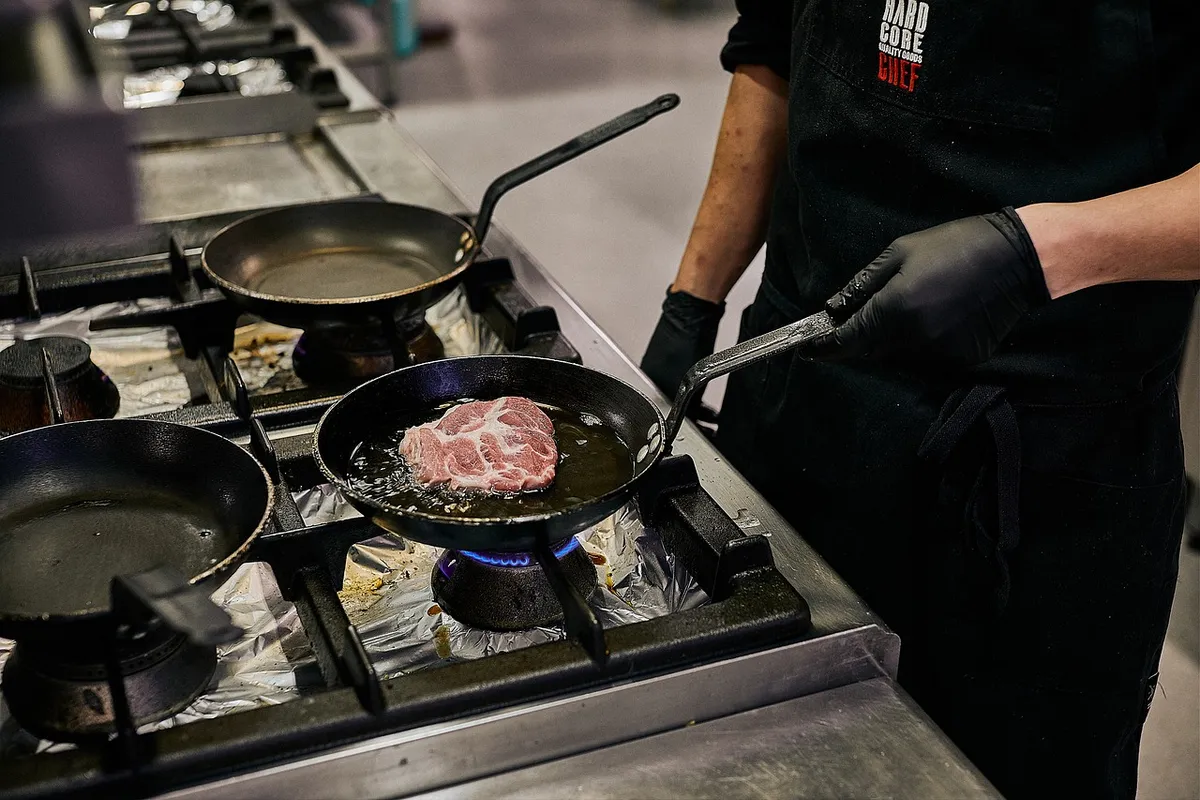
The practical outcome is the behaviour on the hob. Cast iron takes a while to heat and has hotter and cooler areas on a small burner, but once hot it keeps the temperature when you add a cold steak. A thin nonstick pan heats quickly and evenly, and cools quickly, so it suits delicate foods and quick tasks. A well made clad stainless pan sits between the two, with even heat and moderate retention.
| Pan type | Heating | Heat retention | Weight |
|---|---|---|---|
| Clad stainless steel | Even, moderate speed | Moderate | Medium |
| Nonstick, aluminium body | Fast, even | Low | Light |
| Cast iron | Slow, can be uneven on small burners | High | Heavy |
| Carbon steel | Moderate | Moderate to high | Medium to heavy |
Clad construction and what you are paying for
Stainless steel on its own is durable and non-reactive but heats badly, so quality pans bond layers together. Fully clad pans have a core of aluminium sandwiched between steel layers, running up the sides, so the whole pan heats evenly. Cheaper pans have only a disc of aluminium bonded to the base, known as an encapsulated base, which heats the bottom evenly but leaves the sides cooler.
The number of layers is often used as a marketing figure. More layers do not necessarily mean better cooking, and what matters is the total thickness of the conductive core and the quality of the bond. A good clad pan feels solid and has a flat base. A thin one with a very light disc is not much better than a plain steel pan, and may warp over time.
The inner steel surface is what the food touches, and the outer layer matters for induction, since a magnetic outer layer is needed. A well made clad pan will last for decades and tolerates metal utensils, dishwashers and high heat. The cost is the effort to prevent sticking, which is the next trade off.
Nonstick coatings: PTFE and ceramic
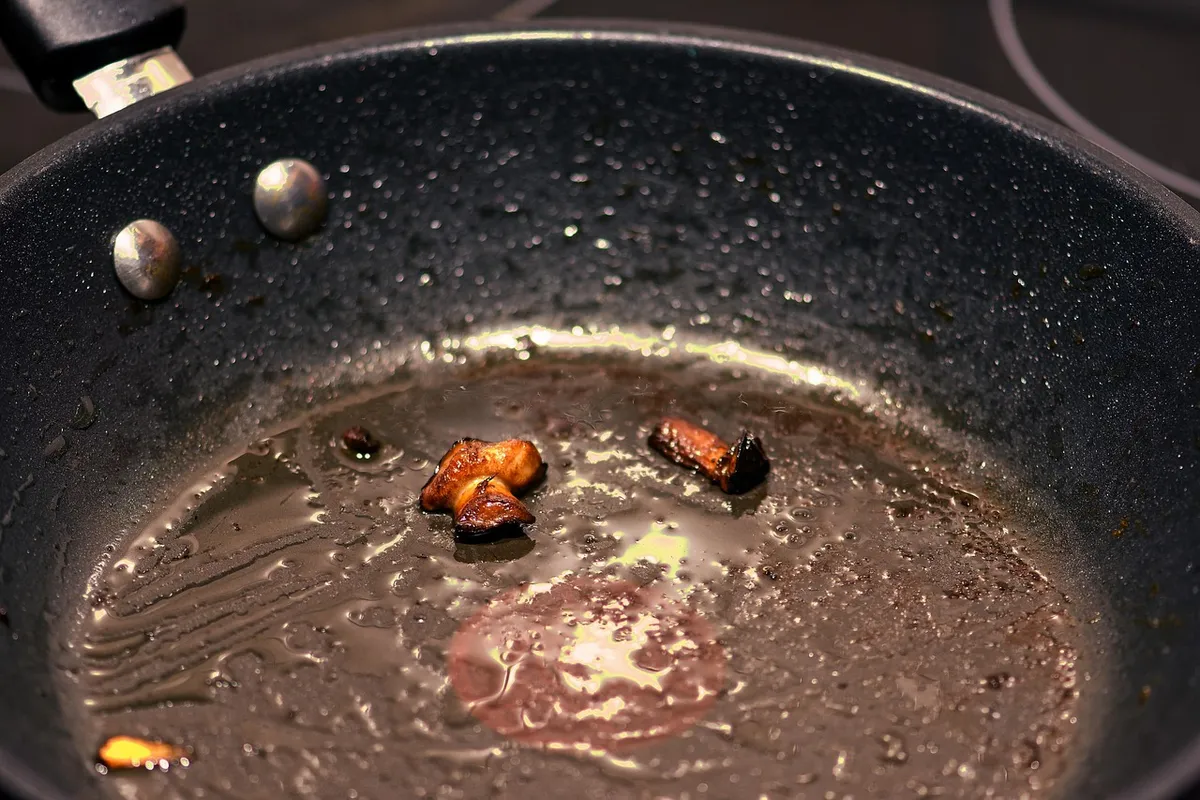
Most nonstick pans use PTFE, a slippery polymer applied in layers to an aluminium body. It releases eggs, pancakes and delicate fish without much fat, and it cleans easily. The coating is thin and wears with use, from scratches, heat and abrasive cleaning, and when it begins to flake or lose slipperiness the pan has reached the end of its life. Expect it to be a consumable, lasting a few years with careful use.
Manufacturers commonly advise keeping PTFE pans below roughly 260 degrees Celsius, or 500 degrees Fahrenheit, because the coating begins to break down above that. An empty pan on a high burner can reach this quickly. Fumes released by overheated PTFE can cause flu-like symptoms in people and can be fatal to pet birds, which are very sensitive, so keep birds away from the kitchen when using nonstick, and never preheat an empty pan on high.
Ceramic coatings, often based on silica, are marketed as an alternative that avoids PTFE. They release food well at first, but in owner reports tend to lose slipperiness sooner than PTFE and do not like high heat or abrasion. No source documents a standard for how long they last, so treat claims of years with caution. Both types suffer from metal utensils, aerosol sprays and the dishwasher, which strip the surface.
Cast iron and seasoning
Cast iron is a thick, heavy pan that stores a lot of heat and lasts a lifetime or more. Its cooking surface improves with use through seasoning, a thin layer of polymerised oil baked onto the metal, which gives a natural, durable nonstick finish. The method is covered in how to season cast iron. A well seasoned pan releases eggs and fries well, and can be restored if damaged.
The costs are weight and care. A large skillet is heavy, hard to lift with one hand, and can scratch a glass hob if dragged. It will rust if left wet, and a long simmer of acidic food such as tomato sauce can strip seasoning and leave a metallic taste in a young pan. Dry it promptly, rub a thin film of oil on it, and avoid long soaking.
Enamelled cast iron is a related but different product. It has a glass coating that needs no seasoning and resists acid, so it suits stews and braises. It can chip if knocked or overheated, and the enamel interior is less nonstick than seasoned iron. It cleans easily and does not rust inside, but cannot be seasoned or restored in the same way.
Which foods suit which pan
Nonstick suits eggs, omelettes, pancakes, delicate fish and anything sticky or low in fat. Because it works at moderate temperatures, it is the pan for gentle cooking and for people who want to use little oil. It is a poor choice for hard searing, since the heat limit prevents a deep crust, and it does not develop the browned bits needed for pan sauces.
Stainless excels at searing, pan frying, browning and sauces. Food that sticks at first releases as a crust forms, and the browned residue, called fond, dissolves into a pan sauce with wine or stock. It is also the best for acidic dishes, as it does not react. It is the pan to learn technique on, since heat control and enough fat, with a preheated pan, prevent most sticking.
Cast iron suits searing steaks, frying chicken, baking cornbread and anything that benefits from steady heat. It goes from hob to oven, and holds a high temperature for crisp results. It is less good for delicate fish and long acidic cooking, and its weight makes it awkward for tossing and flipping. Carbon steel behaves like a lighter cast iron and also needs seasoning.
Oven safety and induction compatibility
Oven limits differ by pan and by handle. Stainless pans with metal handles are generally oven safe to high temperatures, often 230 to 260 degrees Celsius, but check the maker's figure. Cast iron is oven safe to very high temperatures. Nonstick pans are limited by the coating and the handle, with many rated to a lower temperature, and a plastic or silicone handle may melt, so check before using them in the oven.
For induction, the pan needs a magnetic base. Cast iron and most stainless steel work, as do many nonstick pans with a steel disc in the base, but plain aluminium and copper do not. The magnet test is simple: a magnet that sticks firmly to the base indicates a pan that will work. The wider decision about hobs is covered in induction versus gas versus electric.
A flat base matters on glass and induction surfaces. Warped bases rock and heat unevenly, and heavy cast iron with a rough base can scratch glass. Lift rather than slide. If you use an oven mode that circulates hot air, as in an air fryer or convection oven, the same oven limits apply, and the guide to air fryers and convection ovens covers coatings there.
The starter set argument
A matching set of ten pieces looks economical, but usually contains pans you never use, in sizes that do not suit your cooking. A better start is three pans: a 10 or 12 inch clad stainless skillet, a 10 inch nonstick skillet and a cast iron skillet of similar size. Add a stainless saucepan and a larger pot as needed. This covers searing, delicate foods and oven work.
Spend where it counts. Put money into the stainless pan and the cast iron, which last decades, and buy the nonstick pan as a consumable, replacing it when the coating wears. A premium nonstick pan costs more and may last a little longer, but it is still a consumable, and no source documents a reliable lifespan for any of them.
For a small household or a first kitchen, two pans may be enough: a stainless skillet and a nonstick one. Add cast iron later if you want steady high heat. Fill gaps with a lid that fits several pans. For more on kitchen equipment, see the home and kitchen category.
Carbon steel deserves a short note because it sits between the others. It is thinner and lighter than cast iron, heats faster, and develops a seasoning in the same way, so it is a favourite of restaurant cooks for searing and for woks. It needs the same care as cast iron, rusts if neglected, and can warp if heated unevenly. If cast iron is too heavy for you but you want a seasoned surface, carbon steel is the usual answer.
Handles and ergonomics are an overlooked part of the choice. A pan that is too heavy to lift comfortably will not be used, and a handle that gets hot in the oven or on a gas flame is a burn waiting to happen. Stainless handles stay cool on the hob for a while but heat in the oven. Cast iron handles are part of the pan and get hot everywhere, so keep a thick cloth or a silicone sleeve nearby. Try a pan in your hand before buying where you can.
Size is the other practical question. A 10 inch pan serves one or two people, a 12 inch pan is better for a family or for searing several pieces without crowding, and crowding is the usual reason food steams instead of browning. A lid that fits is useful for stainless and a deep nonstick pan, turning them into a shallow braiser. If you only buy one stainless pan, a 12 inch skillet with a lid is the most versatile choice.
Finally, consider warranty claims with some scepticism. Lifetime warranties on pans often exclude normal wear, misuse, overheating and the dishwasher, which covers most of the ways pans fail. A warranty is a mild sign of confidence, not a promise that a coating will last, so judge a pan by its construction and by patterns in owner feedback over several years, not by the length of the guarantee.
Care rules that decide lifespan
Stainless: let the pan preheat, add oil, then food. Soak and scrub burnt food, and use a mild abrasive or a paste of bicarbonate of soda for discolouration. A rainbow tint can be removed with a little vinegar. Avoid thermal shock, such as running cold water onto a very hot pan, which can warp it.
Nonstick: use low to medium heat, wooden or silicone tools, and hand wash with a soft sponge. Do not stack pans without a protective layer between them, and do not use aerosol sprays. Replace the pan when the surface scratches deeply or flakes. Do not heat an empty pan.
Cast iron: dry on the hob after washing, wipe with a thin film of oil, and keep out of the dishwasher. Mild soap is fine on a well seasoned pan. Reseason if the surface looks dull or rusty. If you are cooking for someone with a health condition affecting iron levels, check with a doctor, as cast iron can add small amounts of iron to food.
Frequently asked questions
Is nonstick cookware safe?
Used within the maker's temperature limit and replaced when damaged, modern PTFE pans are widely regarded as safe for normal cooking. Do not overheat an empty pan, and keep pet birds well away from the kitchen. Discard pans with flaking coatings.
Why does food stick to my stainless pan?
Usually the pan was not hot enough when the food went in, or there was too little fat. Preheat the pan, add oil, and wait for it to shimmer before adding food. Let a crust form and the food will release by itself.
Can I use metal utensils on cast iron?
Yes, on seasoned cast iron, which is durable. Metal may scrape a young or thin seasoning, so use wood or silicone while building it. Never use metal on nonstick or ceramic coatings.
Is cast iron good for beginners?
It is forgiving of heat and cheap for the lifespan, but needs a little care. Learn to dry and oil it, and it will serve for decades. The weight is the main drawback.
Do I need all three types?
Not strictly, but each does something the others do not. A stainless skillet and a nonstick one cover most needs, and cast iron adds searing and oven work. Buy what matches your cooking.
What if I have an induction hob?
Check each pan with a magnet. Cast iron and most stainless work. Many nonstick pans work too, if their base is magnetic. Replace plain aluminium pans or use an induction interface disc as a stopgap.
The bottom line
Match the pan to the job. Use nonstick for eggs and delicate foods at moderate heat, stainless for searing, sauces and acidic dishes, and cast iron for steady high heat and oven cooking. No single material does everything well.
Buy a small mixed set: one good clad stainless skillet, one nonstick pan you expect to replace, and one cast iron skillet. Spend more on the stainless and iron, which last for decades, and treat the nonstick as a consumable.
Care determines life: preheat stainless, protect nonstick from heat and metal, and dry and oil cast iron. With those habits, the pans you choose will serve for years, and the arguments between camps will matter much less.