Amazon affiliate links - we earn a commission.Affiliate disclosure
Guide·13 min read

Dehumidifier Size Explained: Pints Per Day and Choosing Capacity

What pints per day means after the 2019 DOE test change, how to match capacity to room and dampness, compressor versus desiccant, drainage, targets and noise.

By Brianna Cole · Updated 2026-11-21

Quick answer

A dehumidifier's size is its daily water removal in pints, measured under a fixed test condition. Since a 2019 change to the US Department of Energy test, new ratings use cooler, drier conditions, so the same hardware shows a lower number than older labels. Match capacity to floor area and how damp the space is: small and slightly damp rooms need the smallest units, large or wet basements need the biggest. Aim to hold indoor humidity between 30 and 50 percent.

Buy a dehumidifier by the number on the box and you may end up with a machine that runs flat out all day without making the room feel any drier, or one so large that it cycles on and off and costs more than it should. The number in question, pints per day, is real, but it describes a laboratory condition that may be nothing like your basement, and the test itself was changed in 2019 in a way that confuses anyone comparing old and new labels.

This guide explains what the rating measures, how the test change affects comparisons, how to match capacity to floor area and dampness, the difference between compressor and desiccant designs, why temperature changes performance, why continuous drainage matters, the humidity range to aim for, and what to expect for noise and energy use. It also covers mould, which is the reason most people buy one.

What the pints per day rating means

A dehumidifier's capacity is quoted as the volume of water it can remove from the air in 24 hours, in pints in the United States and in litres elsewhere. The figure is measured in a test chamber at a fixed temperature and relative humidity. It tells you how much moisture the machine can extract under those specific conditions, assuming it runs continuously for the full day.

Real use differs in two ways. First, the machine runs only as needed, cycling off when the humidity reaches your target, so the actual water collected is usually less than the rating. Second, the conditions in your home are rarely the test conditions. A cool basement removes less water per hour than a warm room, because the physics of condensation change with temperature, which is covered later in this guide.

The rating is therefore best used as a way to compare machines, and to choose a class of size. It is not a prediction of how many pints you will empty each day. In practice, a damp room might yield only a fraction of the rated capacity, and that is normal, because the air itself holds only so much water at a given temperature.

The 2019 DOE test change

In 2019 the US Department of Energy changed the standard test condition for ratings. The old test measured capacity at a warm 80 degrees Fahrenheit and 60 percent relative humidity. The new test uses a cooler 65 degrees Fahrenheit at the same 60 percent, which is closer to the conditions in a typical damp basement. Because cool air holds less moisture, the same machine removes less water in the new test.

The effect is that a model rated with the new test shows a lower number than a similar machine rated under the old one. A unit sold as a certain size under the old system is sold as a smaller size under the new one, though nothing about the hardware changed. Some older listings and remaining stock still show the old numbers, so two machines with the same box figure may not be equal.

When comparing, check which test the rating uses. A newer label often mentions the lower temperature or states the year. If it does not, assume that a figure for a listing that has been on sale for years may be an old style rating, and treat it as a more generous number. Prefer the new style rating for sizing, since it better reflects a cool, damp space. No source documents a simple universal conversion between the two, so compare like with like.

Room situationTypical dampnessCapacity class to consider
Small bedroom or closet, slightly stuffyOccasionally muggySmallest class, or a small desiccant unit
Medium room, noticeable damp smellDamp in humid monthsMid class sized for the floor area
Large basement, musty most of the yearOften dampLarger class, with continuous drain
Very wet space, visible condensation or leaksWetLargest class, and fix the water source first
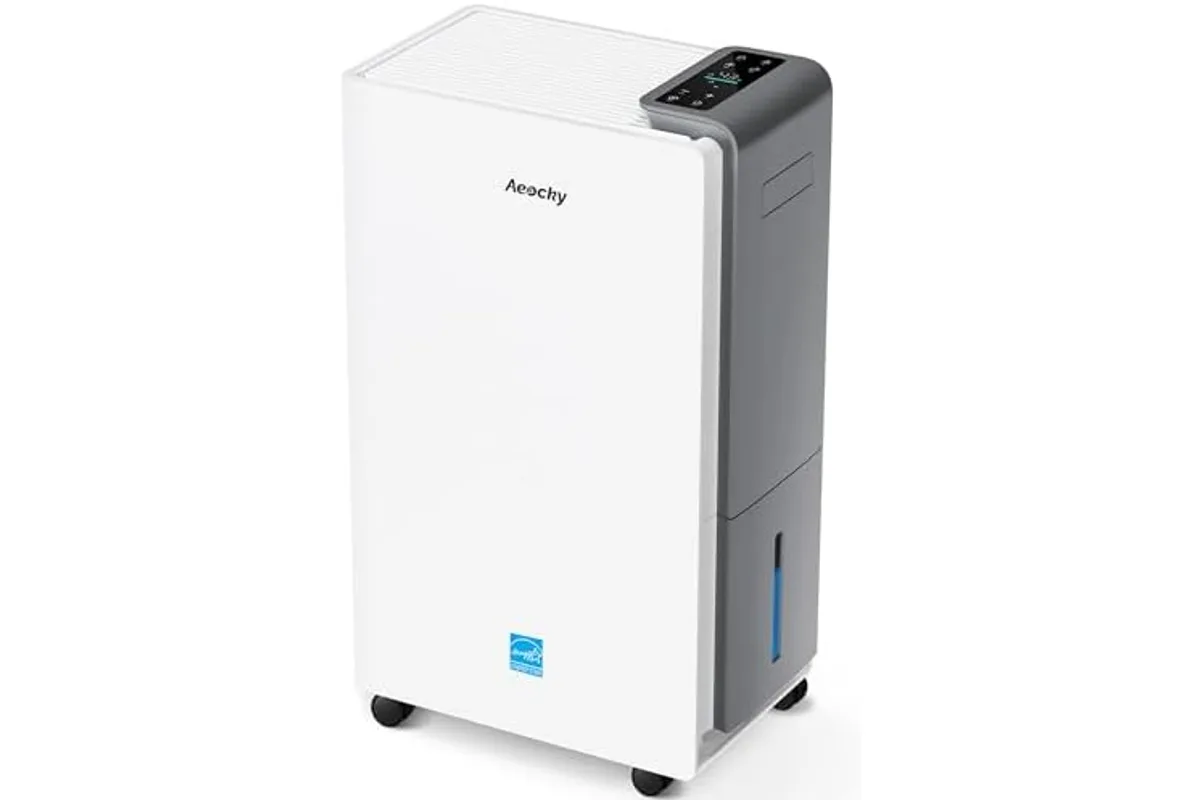
A portable dehumidifier of the type compared by pints per day
A compressor dehumidifier sized for a home, with a front water tank.

Matching capacity to space and dampness

Manufacturers publish suggested floor areas for each capacity, and the figures are a starting point. Treat the stated area as the maximum for slightly damp conditions. For a space that is very damp or has high ceilings, step up one class. For a space that is only mildly humid in summer, the smaller unit is enough. The dampness of the space is as important as its size.

Signs of dampness help you choose. A musty smell, condensation on windows and pipes, a damp feeling in towels and clothes that will not dry, and visible mould on walls or in corners indicate a moderately wet space. Standing water, wet walls or a flooded floor indicate a water ingress problem that a dehumidifier cannot solve alone. Fix leaks and drainage first.

Going bigger is usually better than going smaller, because a larger machine reaches the target faster and then cycles off, which can save energy overall. But an oversized unit in a small room can drop humidity too low and is wasteful to buy and noisy. The best fit is a machine whose class matches the floor area and dampness, with a little headroom for the coldest and dampest months.

Compressor versus desiccant

Most dehumidifiers use a compressor and a cold coil, just like a small refrigerator. Warm, humid air is drawn over the cold coil, the water vapour condenses into droplets, and the dried air is reheated slightly and returned to the room. This is efficient in warm, humid conditions, which is why compressor models dominate in most homes.

Compressor machines lose effectiveness as the air gets cooler. In a cold room the coil can freeze over, and the machine must pause to defrost, which reduces output. Many have a defrost sensor, and some operate down to about 5 degrees Celsius, or 41 degrees Fahrenheit, before struggling. Below that, a compressor model may be inefficient or useless in an unheated garage or cabin in winter.

Desiccant models use a material, such as silica gel, that absorbs moisture from the air and is then heated to release it. They work well at low temperatures, since they do not rely on a cold coil, and are typically lighter and quieter. They use more energy per litre in warm conditions and release some warmth into the room, which can be an advantage in a cold space and a disadvantage in a hot one.

How temperature changes performance

Cold air holds less water vapour than warm air at the same relative humidity, so there is less moisture available to remove. A compressor dehumidifier in a 15 degree Celsius basement will collect noticeably less water than the same machine in a 25 degree room, even with identical humidity readings. This is the reason for the cooler test condition after 2019.

The practical implication is that the damp basements people buy dehumidifiers for are the hardest conditions. Choose a unit with a rated capacity that fits those cool conditions, or one explicitly designed for low temperatures. A machine that works well in summer may stall in a cool autumn when mould risk is still high, so check the operating temperature range in the specifications.

Warmth in the room from other sources also affects the machine. A dehumidifier adds some heat as the compressor runs, so a small closed room warms slightly. Keep doors and windows closed while it runs, because outside air brings in more moisture than the machine can remove. For a damp room with an open window, no capacity will keep up.
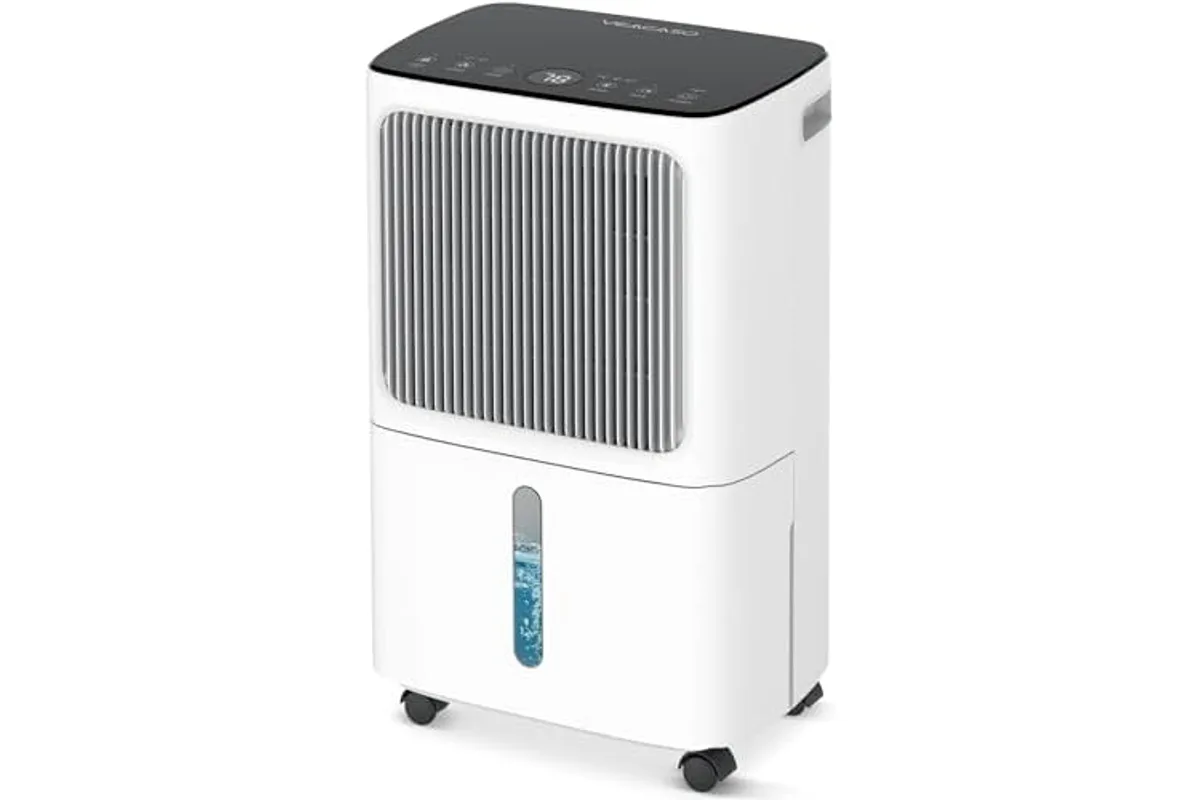
A portable dehumidifier of the type compared by pints per day
A compressor dehumidifier sized for a home, with a front water tank.

Continuous drain and humidity targets

Every dehumidifier collects water in a bucket, which must be emptied, or runs it out through a hose. A bucket of a few litres can fill in a day in a damp room, and the machine stops when it is full. If you do not want to empty it daily, a continuous drain hose that runs by gravity to a floor drain or a sink is a major convenience. Check that the model has a drain connector and that the hose can fall continuously.

If there is no drain at a lower level, look for a model with a built in condensate pump, which lifts the water through a hose to a sink or out of a window. Pumps add cost and noise, and can fail if they clog, so check that the filter and pump are accessible. The bucket remains a backup in case the hose is blocked.

Aim to keep indoor relative humidity between about 30 and 50 percent, which is the range generally recommended for comfort and for limiting mould and dust mites. A humidistat built into the machine does this automatically, but a separate hygrometer is a cheap and more reliable check, since built in sensors can be inaccurate. Going below 30 percent can dry the skin and the throat, and the balance with a humidifier is explained in humidifier types compared.

Noise, energy and running cost

A compressor and a fan produce a steady hum, usually around that of a refrigerator or a quiet fan, with the fan speed adjusting the sound. For a basement or utility room that is not a problem. For a bedroom, check the decibel figure at the lowest setting, and consider a desiccant model, which is typically quieter. As with other appliances, the decibel number on the box is often for the lowest speed and not the one that does the work.

Energy use varies a lot. Larger machines use more power, but a machine that reaches the target quickly and cycles off may use less than a small one running continuously. Look for an energy efficiency label and a figure for litres removed per kilowatt hour, where one is given. No source documents a typical running cost that holds across homes, because it depends on your electricity price, climate and the dampness of the space.

Maintenance affects both. Clean the air filter regularly, since a clogged filter reduces airflow and capacity, in the same way as the filter of an air purifier, which is explained in what CADR means. Empty and rinse the bucket to prevent slime and odour, and keep the coils free of dust. Hard water scale is not a big problem here, but standing water can grow bacteria, which a quick rinse prevents. For scale on other appliances, see how to descale a coffee maker.

Mould, health and when to get help

Mould grows where humidity stays high, typically above about 60 percent for long periods, and where surfaces are cold enough for condensation. A dehumidifier lowers the humidity and slows growth, but it does not remove existing mould, and it does not fix leaks, rising damp or a lack of ventilation. Remove small patches of surface mould with detergent and water, and fix the cause of the moisture.

Large areas of mould, mould that returns quickly, a persistent musty smell after dehumidifying, or damp that is caused by a leak or structural problem need a professional assessment. A surveyor or a damp specialist can identify the source. Do not disturb large mould growth without protection, as spores can irritate the lungs.

Anyone with asthma, allergies or a weakened immune system who reacts to damp, musty rooms should speak to a doctor, especially if symptoms such as wheezing or persistent cough get worse in damp spaces. Seek urgent care for severe breathing difficulty. A dehumidifier is a supporting measure alongside repair and ventilation. Browse the home and kitchen category for related guides.

Placement and everyday use

Place the unit centrally in the damp space, away from walls, with at least 30 centimetres of clearance on the sides for airflow, and on a level surface. Keep doors and windows closed while it runs. In a large open basement, one machine may only treat the area around it, so for a space with several rooms, run one unit per zone or open interior doors so air can circulate.

Use the humidistat at a target of around 45 to 50 percent, and lower it only if damp persists. Drying laundry indoors in a closed room with a dehumidifier is effective and can save energy compared with a tumble dryer, though a closed room fills with moisture quickly, so use a high capacity setting and ensure the room is closed.

Frequently asked questions

What size dehumidifier do I need for a basement?

It depends on floor area and dampness, and on the test rating on the label. For a moderately damp basement, choose a mid to large class from the maker's suggested area, and step up one class if it is very damp or has high ceilings. Use a newer style rating where possible.

Does a bigger dehumidifier use more electricity?

It draws more power while running, but it reaches the target humidity faster and then switches off, so it may use less overall than a small machine working all day. The better measure is energy per litre removed, where the maker gives it.

Why is my dehumidifier not collecting much water?

The air may already be drier than you think, the room may be cold, or the filter or coil may be clogged. Check the humidity with a separate meter and clean the filter. A frozen coil in a cold room reduces output.

Is a desiccant dehumidifier better?

For cold spaces, yes, since it works at low temperatures and is often quieter and lighter. In warm, humid rooms a compressor model is more efficient. Choose by the temperature of the space.

Can I leave a dehumidifier running all day?

Yes, if it has a humidistat that cycles it off at the target. Make sure the bucket or drain will not overflow. Do not leave one running unattended with a blocked drain or in a closed room that you are not monitoring.

How low should I set the humidity?

Between 30 and 50 percent is the usual aim. Setting it very low wastes energy and can dry out skin and wooden furniture. Use a separate hygrometer to confirm what the machine achieves.

The bottom line

Size a dehumidifier by floor area and dampness, using a rating that states the newer, cooler test condition, and step up a class for a very damp or high ceilinged space. Do not read the pints per day figure as how much water you will collect.

Choose a compressor model for warm, humid rooms and a desiccant one for cold spaces, and add continuous drainage if you do not want to empty a bucket daily. Keep humidity between 30 and 50 percent, checked with a separate meter.

Fix leaks and ventilation as well, because no machine solves a water source. Clean the filter and bucket regularly, and treat the machine as part of a damp control routine, not a cure.

Image credits

  • adjdb-fixed-rack.webp: stevepb, Pixabay Content License, source via Pixabay
  • adjdb-spinlock-pair.webp: Arcaion, Pixabay Content License, source via Pixabay
  • adjdb-pair-floor.webp: stevepb, Pixabay Content License, source via Pixabay
  • airfryer-2020-unit.webp: vaxey44972, Pixabay Content License, source via Pixabay
  • airfryer-interior-basket.webp: planet_fox, Pixabay Content License, source via Pixabay
  • airfryer-tabletop-convection.webp: Bagoto, CC BY-SA 4.0, source via Openverse
  • bat-drill-pack.webp: bluebudgie, Pixabay Content License, source via Pixabay
  • bat-ryobi-5ah.webp: Alexei_other, Pixabay Content License, source via Pixabay
  • btcodec-wireless-headphones.webp: vinny1987, Pixabay Content License, source via Pixabay
  • brushless-cordless-drill.webp: dreimarkfuffzig, Pixabay Content License, source via Pixabay
  • brushless-drill-driving-screw.webp: Bru-nO, Pixabay Content License, source via Pixabay
  • sawblade-carbide-teeth-closeup.webp: annawaldl, Pixabay Content License, source via Pixabay
  • sawblade-circular-saw-blade-teeth.webp: jeanvdmeulen, Pixabay Content License, source via Pixabay
  • sawblade-cordless-circular-saw.webp: PfenningMassivholzmoebel, Pixabay Content License, source via Pixabay
  • impact-driver-hex-collet.webp: Mark Hunter, CC BY 2.0, source via Wikimedia Commons
  • foamroller-row-densities.webp: Pexels, Pixabay Content License, source via Pixabay
  • foamroller-thigh-use.webp: Pexels, Pixabay Content License, source via Pixabay
  • foamroller-back-use.webp: Pexels, Pixabay Content License, source via Pixabay
  • hose-coiled-green.webp: Ralphs_Fotos, Pixabay Content License, source via Pixabay
  • hose-nozzle-spray.webp: manfredrichter, Pixabay Content License, source via Pixabay
  • hose-reel-storage.webp: RyanMcGuire, Pixabay Content License, source via Pixabay
  • grillchoice-gas-charcoal-side.webp: pixel2013, Pixabay Content License, source via Pixabay
  • grillchoice-charcoal-kettle.webp: adonyig, Pixabay Content License, source via Pixabay
  • grillchoice-gas-burners.webp: RAMillu, Pixabay Content License, source via Pixabay
  • anc-over-ear-headphones.webp: rupixen, Pixabay Content License, source via Pixabay
  • anc-headphones-over-ear.webp: terydanphiri, Pixabay Content License, source via Pixabay
  • anc-earbuds-case.webp: MUSIC_AND_WALLPAPER, Pixabay Content License, source via Pixabay
  • yogamat-rolled-studio.webp: pixelcreatures, Pixabay Content License, source via Pixabay
  • yogamat-cork-surface.webp: lograstudio, Pixabay Content License, source via Pixabay
  • yogamat-practice-pose.webp: StockSnap, Pixabay Content License, source via Pixabay
  • bits-sds-set.webp: blickpixel, Pixabay Content License, source via Pixabay
  • bits-gold-twist.webp: Life-Of-Pix, Pixabay Content License, source via Pixabay
  • bits-aluminium-oil.webp: blickpixel, Pixabay Content License, source via Pixabay
  • dumbbell-rack-rows.webp: anncapictures, Pixabay Content License, source via Pixabay
  • dumbbell-curl-rack.webp: markusspiske, Pixabay Content License, source via Pixabay
  • dumbbell-hand-grip.webp: Engin_Akyurt, Pixabay Content License, source via Pixabay
  • descale-hamilton-maker.webp: andrew welch, CC0, source via Openverse
  • descale-limescale-pot.webp: MuhamadIksan, Pixabay Content License, source via Pixabay
  • descale-espresso-jimmyweee.webp: 2857440, Pixabay Content License, source via Pixabay
  • castiron-skillet-seasoned-surface.webp: ponce_photography, Pixabay Content License, source via Pixabay
  • castiron-skillet-on-hob.webp: ponce_photography, Pixabay Content License, source via Pixabay
  • shears-bypass-pair.webp: Ray_Shrewsberry, Pixabay Content License, source via Pixabay
  • shears-blade-sharpening.webp: CarlottaSilvestrini, Pixabay Content License, source via Pixabay
  • shears-pruning-cut.webp: schraubgut, Pixabay Content License, source via Pixabay
  • humidifier-cool-mist-unit.webp: asundermeier, Pixabay Content License, source via Pixabay
  • humidifier-ultrasonic-mist.webp: Tiluria, Pixabay Content License, source via Pixabay
  • cooktop-induction-pan.webp: MrWashingt0n, Pixabay Content License, source via Pixabay
  • cooktop-gas-burners-flame.webp: ferarcosn, Pixabay Content License, source via Pixabay
  • mower-rotary-lawn-cut.webp: congerdesign, Pixabay Content License, source via Pixabay
  • mower-cordless-battery.webp: ClickerHappy, Pixabay Content License, source via Pixabay
  • mower-robotic-lawn.webp: MonikaP, Pixabay Content License, source via Pixabay
  • blower-backpack-yard.webp: ClickerHappy, Pixabay Content License, source via Pixabay
  • monitor-gaming-desk.webp: StartupStockPhotos, Pixabay Content License, source via Pixabay
  • monitor-curved-display.webp: PublicDomainPictures, Pixabay Content License, source via Pixabay
  • monitor-dual-screen-setup.webp: StartupStockPhotos, Pixabay Content License, source via Pixabay
  • powerbank-capacity-pair.webp: StockSnap, Pixabay Content License, source via Pixabay
  • powerbank-two-units-cable.webp: aiiapromogifts, Pixabay Content License, source via Pixabay
  • powerbank-phone-charging.webp: aiiapromogifts, Pixabay Content License, source via Pixabay
  • raisedbed-cedar-vegetables.webp: planet_fox, Pixabay Content License, source via Pixabay
  • raisedbed-steel-garden.webp: AndreasGoellner, Pixabay Content License, source via Pixabay
  • raisedbed-brick-stone.webp: Farbsynthese, Pixabay Content License, source via Pixabay
  • bands-loop-set-colours.webp: SpencerWing, Pixabay Content License, source via Pixabay
  • robotvac-suction-floor.webp: HOCKULUS, Pixabay Content License, source via Pixabay
  • robotvac-brush-underside.webp: NickyPe, Pixabay Content License, source via Pixabay
  • robotvac-hard-floor-clean.webp: ed_rsnhr, Pixabay Content License, source via Pixabay
  • smarthome-hub-and-sensors.webp: finnhart, Pixabay Content License, source via Pixabay
  • ssd-and-hdd-side-by-side.webp: bohed, Pixabay Content License, source via Pixabay
  • ssd-sata-2-5-inch.webp: blickpixel, Pixabay Content License, source via Pixabay
  • ssd-hard-disk-interior.webp: wir_sind_klein, Pixabay Content License, source via Pixabay
  • pans-three-materials.webp: Unknown, CC0, source via Openverse
  • treadmill-running-belt.webp: lewisgoodphotos, Pixabay Content License, source via Pixabay
  • treadmill-console-belt.webp: Rattakarn_, Pixabay Content License, source via Pixabay
  • grillgrate-drip-tray.webp: pixel2013, Pixabay Content License, source via Pixabay
  • umbrella-market-patio-table.webp: schaerfsystem, Pixabay Content License, source via Pixabay
  • umbrella-cantilever-offset.webp: ClickerHappy, Pixabay Content License, source via Pixabay
  • umbrella-closed-base.webp: Unknown, CC0, source via Openverse
  • level-cross-line-laser-wall.webp: Billbeee at English Wikipedia, CC BY 2.5, source via Openverse
  • level-bubble-vial.webp: Didgeman, Pixabay Content License, source via Pixabay
  • bench-fid-flat-incline.webp: 12019, Pixabay Content License, source via Pixabay
  • bat-contacts.webp: bluebudgie, Pixabay Content License, source via Pixabay
  • btcodec-phone-and-earbuds.webp: Firmbee, Pixabay Content License, source via Pixabay
  • btcodec-over-ear-wireless.webp: HOerwin56, Pixabay Content License, source via Pixabay
  • brushless-drill-motor-parts.webp: Alexei_other, Pixabay Content License, source via Pixabay
  • impact-driver-and-drill-pair.webp: Bru-nO, Pixabay Content License, source via Pixabay
  • impact-driver-decking-screw.webp: PublicDomainPictures, Pixabay Content License, source via Pixabay
  • bike-spin-saddle.webp: musculacaoMM2020, Pixabay Content License, source via Pixabay
  • grillgrate-cast-iron-clean.webp: pixel2013, Pixabay Content License, source via Pixabay
  • grillgrate-brush-hot.webp: 4666192, Pixabay Content License, source via Pixabay
  • humidifier-evaporative-wick.webp: asundermeier, Pixabay Content License, source via Pixabay
  • iprating-water-droplets-device.webp: AS_Photography, Pixabay Content License, source via Pixabay
  • level-rotary-tripod.webp: jarmoluk, Pixabay Content License, source via Pixabay
  • blower-leaf-pile.webp: ClickerHappy, Pixabay Content License, source via Pixabay
  • massagegun-thigh-use.webp: Surprising_Media, Pixabay Content License, source via Pixabay
  • mesh-wifi-node-on-shelf.webp: jeanvdmeulen, Pixabay Content License, source via Pixabay
  • mesh-wifi-node-pair.webp: dmitrochenkooleg, Pixabay Content License, source via Pixabay
  • mesh-wifi-ceiling-access-point.webp: wishedcn0, Pixabay Content License, source via Pixabay
  • multitool-plunge-cut-wood.webp: neelam279, Pixabay Content License, source via Pixabay
  • multitool-flush-cut.webp: powertools, Pixabay Content License, source via Pixabay
  • multitool-blades-set.webp: jeanvdmeulen, Pixabay Content License, source via Pixabay
  • outdoormat-patio-table-set.webp: KarenJubinville, Pixabay Content License, source via Pixabay
  • outdoormat-teak-bench.webp: rhyslud, Pixabay Content License, source via Pixabay
  • outdoormat-wicker-chairs.webp: 1139623, Pixabay Content License, source via Pixabay
  • bands-tube-handles.webp: SpencerWing, Pixabay Content License, source via Pixabay
  • smarthome-smart-plug-wall.webp: finnhart, Pixabay Content License, source via Pixabay
  • pans-stainless-clad-skillet.webp: ujrzanow194, Pixabay Content License, source via Pixabay
  • pans-cast-iron-skillet.webp: fotoblend, Pixabay Content License, source via Pixabay
  • torquewrench-click-socket.webp: stevepb, Pixabay Content License, source via Pixabay
  • treadmill-motor-hood.webp: FitnessStore112, Pixabay Content License, source via Pixabay
  • usbc-charger-cable.webp: C10Maj, Pixabay Content License, source via Pixabay
  • usbc-wall-charger.webp: viarami, Pixabay Content License, source via Pixabay
  • usbc-cables-connectors.webp: ReadyElements, Pixabay Content License, source via Pixabay
  • bench-flat-pad.webp: 12019, Pixabay Content License, source via Pixabay
  • bench-dumbbell-press.webp: Unknown, CC0, source via Openverse
  • bike-indoor-cycling-row.webp: musculacaoMM2020, Pixabay Content License, source via Pixabay
  • castiron-seasoned-skillet.webp: u_uiv44oi92w, Pixabay Content License, source via Pixabay
  • cooktop-induction-surface.webp: Fxq19910504, Pixabay Content License, source via Pixabay
  • iprating-phone-in-water.webp: AS_Photography, Pixabay Content License, source via Pixabay
  • washer-patio-cleaning.webp: Mosatsu, CC BY-SA 4.0, source via Openverse
  • dehumidifier-portable-unit.webp: Amazon product image, Product image, source via Amazon
  • hepa-kowa-filter.webp: Amazon product image, Product image, source via Amazon
  • cadr-purifier-core300.webp: Amazon product image, Product image, source via Amazon
  • studfinder-handheld-scanner.webp: Amazon product image, Product image, source via Amazon
  • rower-air-flywheel-gym.webp: Amazon product image, Product image, source via Amazon
  • wifi-router-antennas.webp: Amazon product image, Product image, source via Amazon
  • sandpaper-grit-sheets.webp: BRRT, Pixabay Content License, source via Pixabay
  • dehumidifier-product-1.webp: Amazon product image, Product image, source via Amazon
  • dehumidifier-product-2.webp: Amazon product image, Product image, source via Amazon
  • hepa-product-1.webp: Amazon product image, Product image, source via Amazon
  • hepa-product-2.webp: Amazon product image, Product image, source via Amazon
  • cadr-product-1.webp: Amazon product image, Product image, source via Amazon
  • cadr-product-2.webp: Amazon product image, Product image, source via Amazon
  • studfinder-product-1.webp: Amazon product image, Product image, source via Amazon
  • studfinder-product-2.webp: Amazon product image, Product image, source via Amazon
  • massagegun-product-1.webp: Amazon product image, Product image, source via Amazon
  • washer-product-1.webp: Amazon product image, Product image, source via Amazon
  • washer-product-2.webp: Amazon product image, Product image, source via Amazon
  • rower-product-1.webp: Amazon product image, Product image, source via Amazon
  • rower-product-2.webp: Amazon product image, Product image, source via Amazon
  • smarthome-product-1.webp: Amazon product image, Product image, source via Amazon
  • torquewrench-product-1.webp: Amazon product image, Product image, source via Amazon
  • torquewrench-product-2.webp: Amazon product image, Product image, source via Amazon
  • wifi-product-1.webp: Amazon product image, Product image, source via Amazon
  • wifi-product-2.webp: Amazon product image, Product image, source via Amazon
  • iprating-wet-smartwatch.webp: indraprojects, Pixabay Content License, source via Pixabay
  • bike-alt-rower-1.webp: Amazon product image, Product image, source via Amazon
  • bands-alt-dumbbell-1.webp: Amazon product image, Product image, source via Amazon
  • sandpaper-drill-1.webp: Amazon product image, Product image, source via Amazon
  • sandpaper-drill-2.webp: Amazon product image, Product image, source via Amazon

Related Guides