Dry winter air cracks lips, irritates sinuses and shocks fingers on door handles, and a humidifier is the obvious remedy. The choice that follows is less obvious. Four designs compete on the shelf, each with a different way of turning liquid water into vapour, and each with a failure mode that the box does not mention: a fine white dust on the furniture, a wick that turns slimy, a hot tank within reach of a toddler, or damp windows from a machine left running.
This guide explains how each type works, how they differ on mineral dust, cleaning, output relative to room size and safety, what humidity to aim for, and how overuse leads to mould. It explains the reasons for each behaviour, which makes it easier to see which type suits your home, your water and your habits.
The four types and how each works
An evaporative humidifier draws air with a fan through a wet wick or filter, and the air picks up moisture as it passes. Only water vapour leaves the machine, and the minerals stay behind in the wick. The rate of evaporation falls as the room air becomes more humid, so the device slows itself, which makes it hard to overdo.
An ultrasonic humidifier uses a vibrating metal plate that shakes water into a fine mist of droplets, which a fan blows out. It is quiet, since there is no heater, and efficient. Because the droplets are made from the tank water, whatever is dissolved in the water leaves with the mist, including minerals, which settle as white dust on nearby surfaces.
A warm mist humidifier, also called a steam vaporiser, boils water with a heating element and releases steam that cools a little before it leaves the machine. The boiling kills most microbes in the water, and most minerals stay behind as scale in the boiler. It uses more energy, and the hot water and steam bring a burn risk. A hybrid combines features, usually an ultrasonic unit with a heating element or an evaporative one with a mist option.
| Type | Mechanism | Strength | Weakness |
|---|---|---|---|
| Evaporative | Fan through a wet wick | Self limiting, no mineral dust | Wick needs replacing, fan noise |
| Ultrasonic cool mist | Vibrating plate makes mist | Quiet, efficient, visible mist | White dust from hard water, needs clean water |
| Warm mist | Boils water to steam | Kills microbes, no dust from minerals | Burn and scald risk, higher energy use |
| Hybrid | Combines two methods | Flexible | More parts to clean, higher cost |
White dust and mineral content
White dust is the most common complaint about ultrasonic humidifiers. Tap water carries dissolved calcium and magnesium, and the ultrasonic plate throws the water as droplets, which carry these minerals. As the droplets evaporate in the air, the minerals are left as a fine powder that settles on shelves, electronics and floors. The harder the water, the more dust you will see.
The dust is mostly calcium and magnesium salts, which are not generally harmful, but the particles are small enough to float in the air and be inhaled. People with asthma or sensitive lungs are advised to avoid breathing them where possible, and some particle counters show a rise when an ultrasonic unit runs on hard water. No source documents a precise health effect, so treat it as a reason to be cautious, not alarmed.
The remedies are simple. Use distilled or demineralised water in an ultrasonic unit, which removes the minerals, though this adds recurring cost. Some units include a demineralisation cartridge, which reduces dust but needs replacing. Alternatively, choose an evaporative or warm mist unit, which leaves the minerals in the wick or boiler. The water hardness in your area decides how serious the issue is, as explained in our descaling guide.
Wicks, tanks and cleaning
All humidifiers need cleaning, because stagnant water in a warm tank is a good place for bacteria and mould to grow. An evaporative wick traps minerals and also grows slime if left wet, so it needs replacing every one to three months in typical use, and sooner if it hardens or smells. A wick that is stiff with scale evaporates less water, so output falls long before you notice it.
For all types, empty the tank and refill it with fresh water every day, rather than topping up, which keeps old water from lingering. Rinse the tank and base every few days, and descale and disinfect weekly in regular use, following the maker's instructions. A dilute white vinegar solution handles scale, and a short soak in a very dilute bleach solution is a common disinfectant, but check the manual and rinse thoroughly, since chemical residue in the mist is not wanted.
Easy cleaning is a feature to prioritise. A wide opening, a tank you can reach with a hand, and few crevices make the job quick, and a quick job gets done. Tanks with a narrow neck and hidden channels tend to be neglected. A humidifier you do not clean is worse than none, because it disperses microbes into the air you breathe.
Output versus room size
Capacity is quoted as millilitres per hour or gallons per day, and makers give a suggested room size. Treat the size as optimistic for a leaky room and for a very dry climate. A machine that is too small cannot reach the target, and runs continuously, and one that is too large may overshoot and cause condensation unless it has a humidistat to switch it off.
Evaporative units tend to be rated conservatively because they slow as the air gets wetter, and they are available in large console models that treat several rooms. Ultrasonic units are usually smaller, suited to bedrooms and offices. Warm mist units tend to be small too, since they need more power. For a whole open plan area, a console evaporative model is typically the practical choice.
A built in humidistat and a separate hygrometer are important. The humidistat switches the machine on and off at a target level, though built in sensors read high or low when placed next to the mist. A separate hygrometer placed across the room gives a truer reading. Compare it with the target and adjust the setting to match, without relying on a number on the device.
The humidity range to aim for
Indoor relative humidity between about 30 and 50 percent is the commonly recommended range for comfort and health. Below 30 percent, skin, lips and airways dry out, wooden furniture can crack and static electricity increases. Above 50 percent, the risk of condensation, dust mites and mould rises. In very cold weather, the safe upper limit is lower, since cold windows are the first place condensation forms.
When outside temperatures fall, the glass of windows becomes cold enough to condense moisture from indoor air even at moderate humidity. If you see water droplets or fog on the inside of windows, lower the humidity setting. Persistent condensation leads to mould around frames and on curtains, and in the extreme to damp damage in the structure.
The balance with the opposite appliance matters in a home with seasonal swings: a dehumidifier in the damp months and a humidifier in the dry ones. Sizing the dehumidifier is covered in dehumidifier size explained. Do not run both at once in the same room, which wastes energy and works against each other.
Safety around children and pets
Warm mist humidifiers carry the highest risk, because the boiling water and hot steam can scald, and a knocked over unit can spill hot water. Keep them out of reach of children and pets, on a stable surface, with the cord out of reach. Many paediatric guides advise cool mist types in a child's room for this reason, though cool mist units have their own hygiene needs.
Cool mist units are safer from burns, but a tipped tank can still wet a floor and an electrical unit should be kept away from water. Place any humidifier on a hard, waterproof surface, away from fabrics, and at some distance from the bed, since a plume of mist aimed at bedding can make it damp. Do not place one directly next to electronics.
Do not add essential oils, medicines or other additives to the water tank unless the maker says it is safe, as oils can damage plastic and some are harmful when inhaled by children and pets. Use only the water the manual allows, and never leave a machine running in a closed, small room all day.
Mould risk from overuse
A humidifier that runs too long raises humidity above the healthy range, and that is the main route to mould and dust mites. Signs include condensation on windows, a musty smell, damp patches on walls and visible dark spots in corners. If you notice them, turn the humidifier down or off and ventilate, and consider a dehumidifier if the damp persists.
The other route is the machine itself. A dirty tank or wick disperses bacteria and mould spores in the mist, and some people with allergies or asthma notice worse symptoms. Cleaning on schedule is the answer, and replacing wicks. Machines that include an antimicrobial treatment or UV light claim to reduce growth, but no source documents that these remove the need for cleaning, so do not skip it.
If you or a family member has a respiratory condition, speak to a doctor before using a humidifier regularly, and seek medical advice if symptoms worsen or if you develop fever, cough or chest tightness after using one. For general air quality questions, see what CADR means and the home and kitchen category.
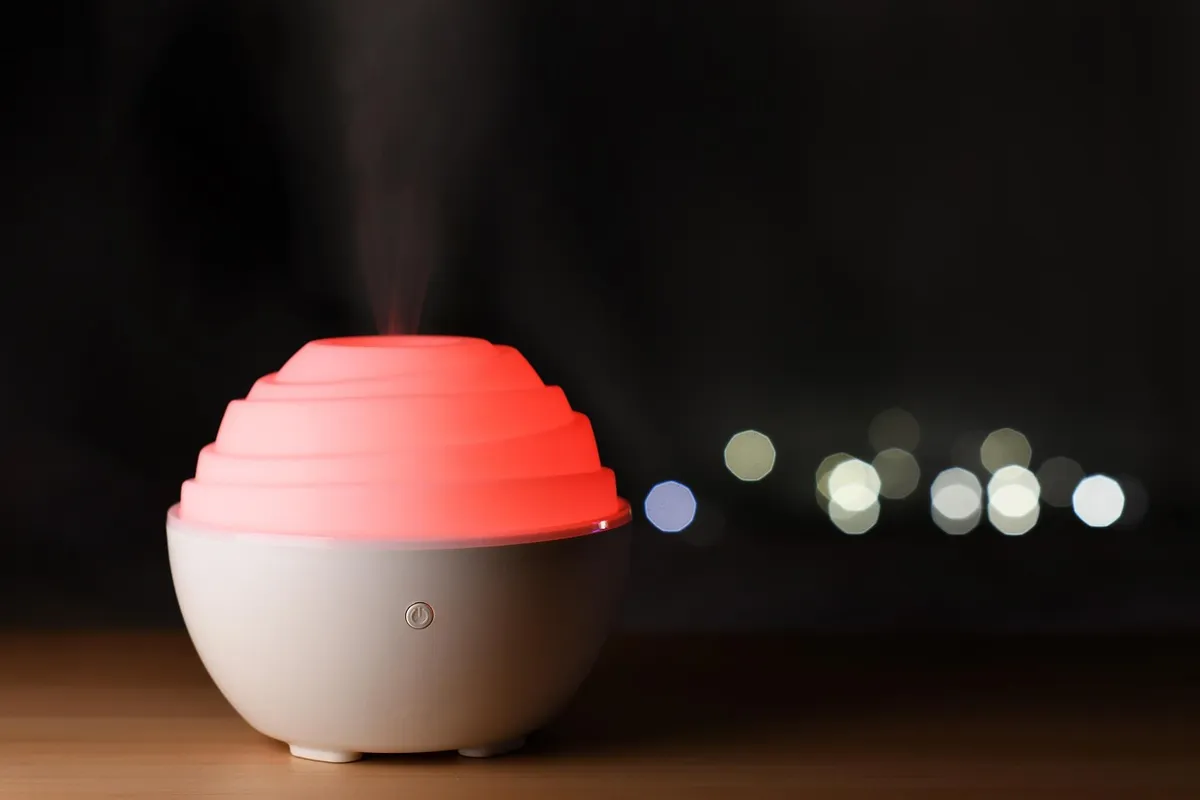
Placement is a quiet factor in how well any of them work. Put the unit on a table or a stand at about knee to waist height, not on the floor, where mist can settle on carpet, and not on a wooden surface that can warp from moisture. Leave space around it so air can move, and keep the outlet pointed into the room, not at a wall or a curtain. A humidifier tucked in a corner behind furniture raises humidity only in that corner and misreads its own sensor.
Water consumption is a practical limit. A tank that holds a few litres may last a night on low and half a day on high, and a unit that runs dry shuts off or, in a cheap model, keeps running and overheats. Look for an automatic shut off and a tank that is easy to carry when full, since a heavy tank that is awkward to fill will be filled less often. For a large home, the larger tank of a console model saves a lot of trips.
Energy cost differs by type as well. Ultrasonic and evaporative units draw modest power, similar to a small fan, while warm mist units draw several hundred watts, like a kettle that never quite switches off. Over a whole season, that gap can be the largest difference in running cost, so factor it in if you plan to use the machine every night.
Finally, travel and storage deserve a thought. At the end of the season, empty the tank, clean and dry every part completely, and store the unit with the lid off so no damp air is trapped inside. A machine put away wet will smell of mould when you bring it out the following winter.
Choosing by situation
For hard water and a family home, an evaporative humidifier is the low maintenance default. It is self limiting, leaves no white dust, and handles a larger room. The costs are fan noise, which is a steady whoosh, and the periodic wick replacement. For a bedroom where noise matters, check the decibel rating on low.
For a quiet bedroom or an office with soft or filtered water, an ultrasonic unit is attractive, being nearly silent, with a visible mist. Use distilled water if you can, or a model with a demineralisation cartridge, and clean it often. For a child's room, a cool mist unit avoids the scald risk, and a placement out of reach avoids spills.
For a cold or flu season when you want hygienic steam, and no small children are around, a warm mist unit is an option, though it uses the most energy and its boiler needs descaling. A hybrid gives flexibility but adds parts to maintain. In every case, a humidistat, a large opening for cleaning and an auto shut off when the tank runs dry are the practical features that matter most.
Frequently asked questions
Which humidifier type is best for a baby's room?
A cool mist unit placed well out of reach is usually advised, since it avoids the scald risk of warm mist. Use clean or distilled water, empty it daily, and keep humidity within 30 to 50 percent. Check with your paediatrician for advice about your child.
Do I need distilled water in a humidifier?
For ultrasonic units, it is the best way to avoid white dust and scale. Evaporative and warm mist units tolerate tap water better, since minerals stay in the wick or boiler, but the manual may still recommend distilled water for longer life.
How often should I clean my humidifier?
Empty and refill the tank daily, rinse every few days, and descale and disinfect weekly in regular use. Replace evaporative wicks every one to three months, or when they stiffen or smell. Follow the manual for details.
Can a humidifier cause mould?
Yes, if it raises the humidity above about 50 percent for long periods or if the machine itself is dirty. Use a separate hygrometer, keep humidity in the target range, and clean the unit regularly.
Are warm mist humidifiers better at killing germs?
Boiling kills most microbes in the water, which makes the output cleaner, but the tank and boiler still need regular cleaning. The scald risk is the reason many people avoid them in homes with young children.
What size humidifier do I need?
Match the output to the room size, using the maker's suggestion as an optimistic guide. For large or open spaces, choose an evaporative console unit. For a bedroom, a small ultrasonic or evaporative unit is enough. A humidistat prevents overshooting.
The bottom line
Choose an evaporative humidifier if you have hard water, a larger room or want low fuss, and accept the fan noise and wick replacements. Choose an ultrasonic cool mist unit for quiet small rooms, and use distilled water or a cartridge to avoid white dust. Choose warm mist only where no small children can reach it.
Keep humidity between 30 and 50 percent, measured with a separate hygrometer. Lower it when windows fog, and turn the machine off if you smell damp. More humidity is not better.
Clean it as a routine, with fresh water daily and descaling weekly. A humidifier that is cleaned and sized well is a comfort. One that is neglected is a source of the very problems you were trying to avoid.