Resistance bands are the cheapest piece of strength equipment you can buy, and one of the most confusing. A shop shelf or an online listing offers long loops, short loops, bands with handles, flat sheets and fabric hoops, each with a colour code that means something different depending on the brand. A buyer who picks the wrong type ends up with a band that rolls up the thigh, snaps its anchor point, or is far too light or too heavy for the exercise.
This guide explains the main types and what each does well, how resistance is labelled and why those labels cannot be trusted across brands, the difference between latex and fabric, how to anchor safely, and how to inspect a band for the damage that precedes a snap. It does not diagnose anything. Anyone recovering from an injury should get exercise guidance from a physiotherapist rather than from a buying guide.
Loop bands
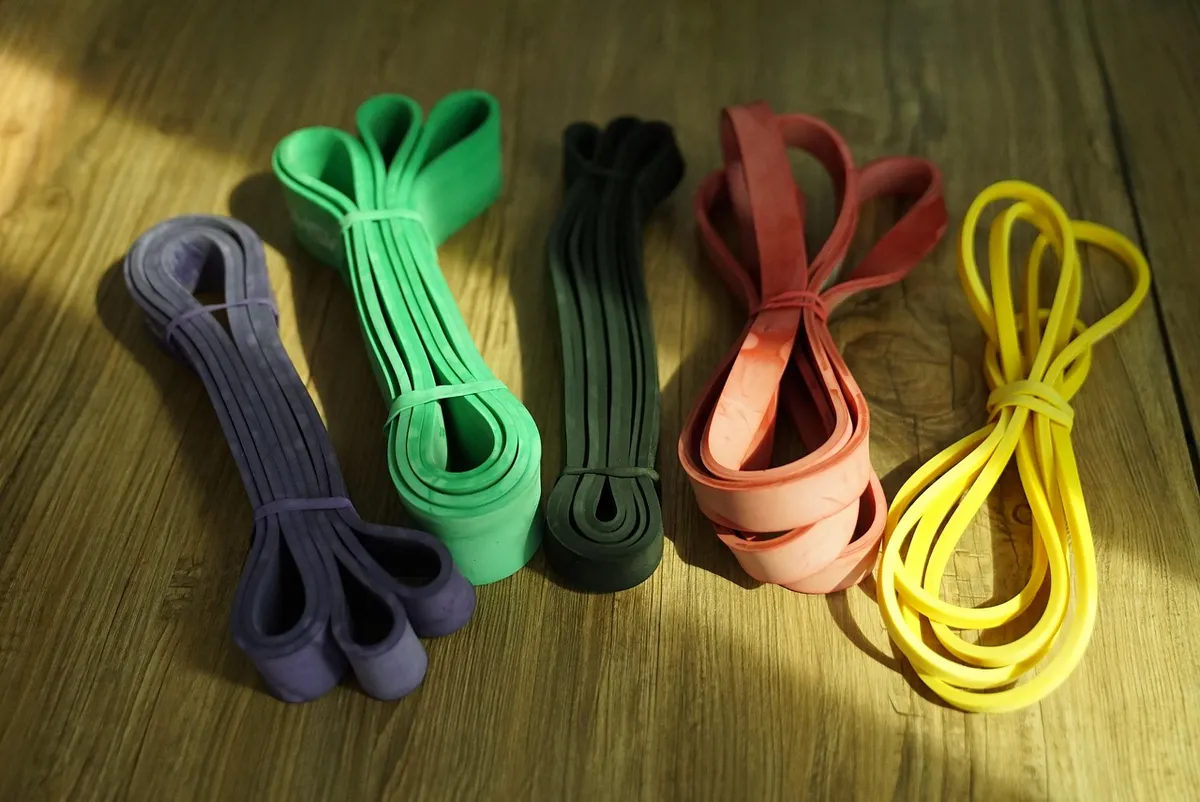
Loop bands, sometimes called power bands or pull up bands, are long, thick, closed loops of latex, typically around 1 metre in circumference and often 5 mm to 45 mm wide. They are strong and versatile. You can loop them around a pull up bar to assist pull ups, stand on them for squats and presses, loop them around the body for added resistance in push ups, or anchor them to a post for rows and pulldowns.
Their strength range is wide, from light bands that suit stretching to heavy bands that can support a significant part of body weight in assisted pull ups. The heavy ones are the choice for building strength and are used by lifters to add resistance to barbell exercises. The weakness is that a loop gives no handles, so the grip depends on how you wrap it around your hands, and it can dig into the skin. A towel or a pair of gloves helps.
Tube bands with handles
Tube bands are hollow rubber tubes with a handle at each end and often a door anchor or ankle straps. They mimic cable machine exercises such as rows, presses, curls and lateral raises, and the handles make them comfortable for a lot of beginners. Many sets let you stack several tubes together to add resistance, and some come with a door anchor so you can pull from a fixed point.
Tube bands are good for people who want a gym like feel at home, and they are easy to adjust. The weaker points are the connection points where the tube joins the handle, which wear and can fail. Check the clips and the carabiners regularly. Stacking several bands increases the load on the clips, so use the manufacturer's rating and do not exceed it.
Mini bands
Mini bands are short loops, about 30 cm in circumference when laid flat, in latex or fabric. They sit around the thighs, knees, ankles or wrists and add resistance to lateral steps, glute bridges, squats and clamshells. They are a staple of warm ups for the hips and glutes, and cheap, tiny and easy to take anywhere.
Latex minis tend to roll up the leg and pinch, which is the most common complaint. Fabric minis, woven from cotton and elastic, stay in place and feel more comfortable, and are generally stronger for the same width. If you do a lot of lower body work, a fabric mini band is worth the small extra cost. Position the band above the knees for glute work, or around the ankles for a harder challenge, but remember that ankle placement can strain the knees in some people.
Therapy bands
Therapy bands are flat strips or sheets of latex or latex free material, sold by length, usually in a roll or a precut length of about 1.5 m. They are the traditional band for gentle strengthening and mobility work, and physiotherapists often use them. They come in light resistance steps, from very light to heavy, and are tied around a limb or a fixed object, or held in the hands.
Their advantage is the gentle, progressive resistance and the low cost. The weaknesses are comfort and durability. A flat band can slip from the hands or dig into the skin, and thin bands tear more easily than tubes or loops. If you were given a therapy band by a professional, follow their instructions on the exercises and the colour, since the same colour from another brand may differ in resistance.
| Band type | Shape | Best for | Watch for |
|---|---|---|---|
| Loop | Long closed circle | Pull ups, squats, general strength | No handles, can pinch the skin |
| Tube with handles | Hollow tube, handles and clips | Cable style rows, presses, curls | Clip and handle wear |
| Mini loop | Short closed circle | Hips, glutes, warm ups | Rolling up the leg, especially latex |
| Therapy band | Flat strip or sheet | Gentle rehab style work, mobility | Tearing, slipping, brand to brand differences |
How resistance is labelled, and why it cannot be trusted across brands
Bands are labelled by colour, by words such as light, medium and heavy, or by a stated resistance in pounds or kilograms. There is no industry standard for any of this, and no source documents an agreed colour code. A red band from one brand may be light, and a red band from another may be heavy. Even within a brand, the colour code can change between product lines.
Stated resistance figures need caution too. A band's resistance rises as it stretches, so a number like 20 kg usually describes the load at a particular stretch, often at roughly double its resting length, and sometimes at its maximum stretch. The force at the start of the movement is lower than at the end, which makes bands feel easy at the bottom of a squat and hard at the top. That rising curve is a real characteristic of bands, and not a flaw, but it means that a band's stated load is only a guide.
The practical approach is to compare bands within a single brand's range, to buy a set that spans light to heavy so you can find what suits each exercise, and to judge by feel and rep ranges rather than by the label. Treat the number as a ranking within the set and not as an absolute force. This is similar to how muscles differ across the body, a point we cover in our guide to choosing dumbbell weight.
Latex versus fabric
Latex bands, made from natural or synthetic rubber, stretch a long way, are light and cheap, and give smooth resistance. Their drawbacks are that they can roll, pinch and pull hair, and they deteriorate with sun, heat, oils and age. They can also snap, particularly if they are nicked or overstretched. A latex allergy rules out natural latex bands, and some people react to the powder or processing used on them. Latex free options are available, usually from thermoplastic elastomer.
Fabric bands have woven cotton or polyester covering elastic strands. They are thicker, more comfortable, resist rolling and snapping better, and feel more secure on the thighs. They stretch less, so they suit exercises where you want firm resistance in a short range, such as glute work, and are less useful for tall, long range pulls. They are usually more expensive, and they can wear and lose elasticity with heavy use. Some people use both: fabric bands for lower body work and latex loops or tubes for long range pulling movements.
Anchoring safely
Anchoring is where many band accidents happen, because the band stores energy that is released if the anchor fails. Use door anchors only on doors that close firmly toward you and are properly latched, and place the anchor in the hinge side so the door pushes against the frame when pulled. Never anchor to a door that opens toward you.
Fixed posts, sturdy bars and the base of a heavy piece of furniture can serve as anchors, if they are stable and the band cannot slide off. Do not anchor to anything that can move, such as a light chair or a loose fence panel. Avoid pulling a band in a direction where it could slip along a surface and snap back. Check that the band sits flat, with no twists and no pinching at the anchor point.
Protect your face and eyes. If a band slips or snaps while stretched, it can whip back sharply. Keep your face away from the line of pull, wear eye protection for the heaviest bands, and avoid stretching a band beyond its stated limit, which is often around two to three times its resting length. Where a stable bench is part of your setup, see our weight bench guide for what to look for.
Inspecting a band and spotting a snap before it happens
Bands fail because of wear, and the signs show up first. Before each session, run your fingers along the band, stretch it gently in sections and look for nicks, tiny cracks, thinning, sticky or powdery patches, and discolouration. Small tears grow quickly under tension. For tube bands, check the cord and the attachment points. For fabric bands, look at the stitching.
Replace any band that shows damage, because a repair cannot restore the strength. Taping or knotting a band is not a safe fix. Even without visible damage, latex bands age, and a band that is a few years old, or that has lived in a hot car or in the sun, is more likely to fail. No source documents a standard lifespan for any band, so judge by condition and by how heavily you use it.
Store bands out of sunlight and heat, clean them with a damp cloth, and avoid contact with sharp edges, jewellery and fingernails. Powder lightly with talc if the latex gets sticky. Keep them away from oils, lotions and chemicals that degrade rubber.
Choosing for your goal
For general strength at home, a set of loop bands in light, medium and heavy gives the widest range, and a tube set adds handles. For lower body and hip work, add a fabric mini band. For gentle mobility or a physiotherapist's programme, a flat therapy band in the strength you have been advised is the sensible choice. For pull ups, a heavier loop band is the standard assistance.
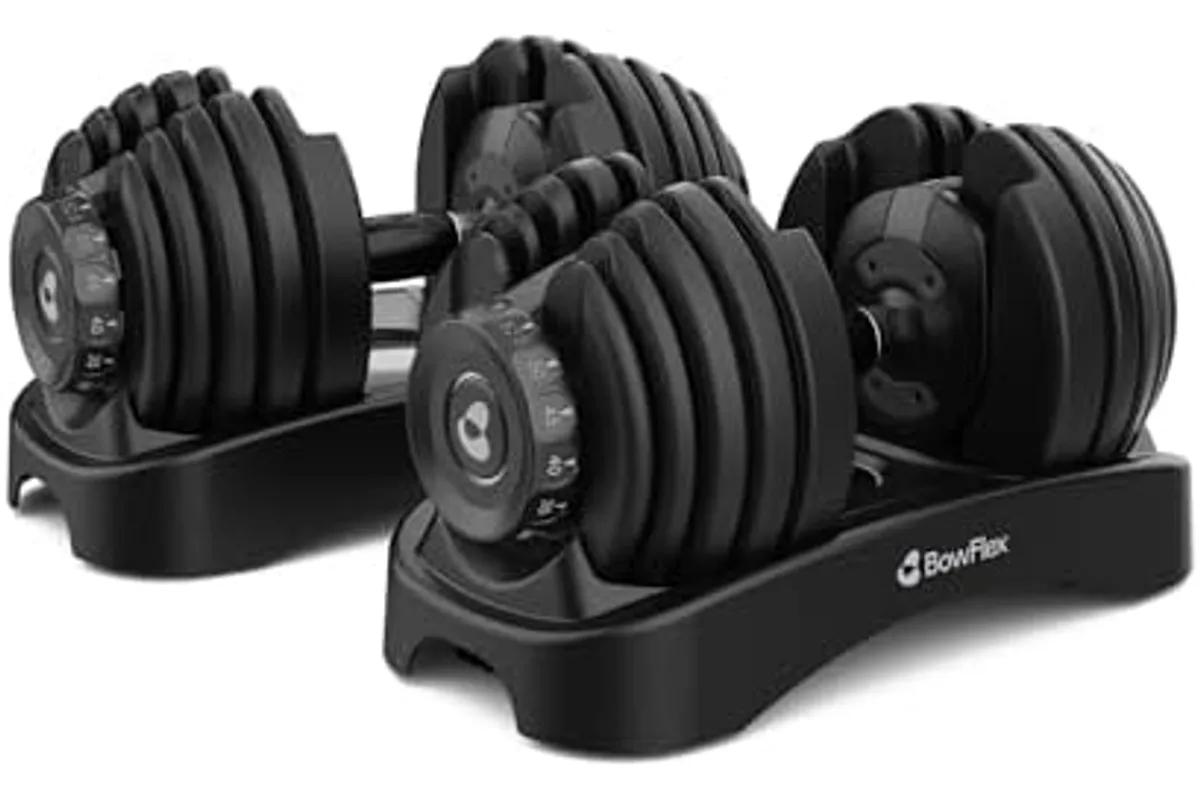
Think about space and travel. Bands weigh almost nothing and fit in a bag, which makes them ideal for travel and small flats. They pair well with a modest pair of dumbbells, and they add a way to progress in small steps when the next dumbbell is too big a jump. For more options in this area, visit our Health and Fitness section.
Finally, be realistic. Bands are excellent for adding variety, travel workouts, warm ups and light strength work. For heavy progressive loading over years, free weights or machines are easier to measure and to progress. Many people use bands as a supplement and not as the whole programme.
Using bands in a routine
Bands change the difficulty of an exercise through the range of motion, and that shapes how you programme them. Because resistance is lowest at the start of a pull and highest at the end, the hardest part of a band row is when your arms are fully back, while a dumbbell row is hardest in the middle. This suits some movements, such as hip extension and presses, where strength is greatest near full extension, and suits others poorly. If you want the start of a movement to feel harder, stand further from the anchor so the band starts with some tension.
Progress with bands by changing one thing at a time. Move to a thicker band, stand further from the anchor, slow the lowering phase, add a pause at the point of peak tension, or add repetitions. Each of these is a small, controllable step, which is why bands are useful when the next dumbbell would be too large a jump. Aim for sets that finish with a couple of repetitions in reserve, as described in our dumbbell guide, and keep form tidy: a band that pulls you off balance is too strong for that exercise.
A simple weekly structure is enough. Two or three sessions covering a push, a pull, a squat or hinge, and some hip work will use a basic set well. Warm up with light bands for the shoulders and hips before heavier work, and use mini bands as an activation drill rather than as the main load. Many people also use bands at the end of a session to finish a muscle group with a high repetition set.
Common mistakes
The most frequent mistake is buying one band and expecting it to work for every exercise. A band that is right for lateral steps is far too light for rows, and one that suits rows is too heavy for shoulder work. A small set across the range solves this for a modest cost.
The second is stretching a band beyond its limit to get more resistance. Overstretching shortens its life and increases the risk of a snap. Choose a thicker band instead. The third is ignoring surfaces: a band dragged across rough concrete or looped around a sharp edge will cut. Pad the contact points, and wrap the band around a towel or use a sleeve where it touches a rough surface. Finally, many people forget to use a full range of movement with bands, because the resistance rises at the end and encourages short, quick reps. Slow, controlled repetitions with a pause at the hardest point are more effective and safer.
Pair band work with a non slip surface, since feet that slide spoil every standing exercise. Our guide to choosing a yoga mat covers thickness and grip for the floor under you.
Frequently asked questions
Are resistance bands as good as weights?
They can build strength, especially for beginners and in lighter exercises, but their resistance changes through the stretch and is harder to measure. Many people use them alongside free weights, not instead of them.
Why do all brands label resistance differently?
There is no industry standard for colour or load labels. Compare bands within a single brand, and judge resistance by how many repetitions you can do with good form.
How do I stop a band rolling up my leg?
Choose a fabric mini band, which has a wider, grippier surface. Latex bands roll more, and wearing them over clothing rather than on bare skin can make them slide more.
How long do resistance bands last?
No source documents a standard lifespan. Inspect before each use, replace any band with nicks or cracks, and keep bands away from heat and sunlight. A few years is common for regular use, but condition is the guide.
Is it safe to use bands after an injury?
Bands are often used in rehabilitation, but the exercises and resistance should come from a physiotherapist who knows your injury. Do not start a programme on your own for a specific injury.
The bottom line
Match the band to the movement: loops for general strength and pull up assistance, tubes for cable style work, fabric minis for hips and glutes, and flat therapy bands for gentle rehab style work. Buy within one brand, trust feel over labels, and replace anything that is nicked or sticky.
Anchor to something stable, keep your face clear, and inspect before every session. Used sensibly, bands are a cheap, portable and effective supplement to a home routine.