Amazon affiliate links - we earn a commission.Affiliate disclosure
Guide·12 min read

Adjustable Weight Bench Guide: What to Check Before You Buy

Flat versus FID weight benches, what weight capacity ratings include, pad width and height, gaps between pads, stability footprint, decline safety and storage.

By Brianna Cole · Updated 2026-11-21

Quick answer

A flat bench is the cheapest and sturdiest, while a flat, incline and decline (FID) bench adds exercise variety at the cost of more moving parts. Check the weight capacity and ask whether it includes your body weight, look for a wide pad with no gap between sections, a wide stable footprint, firm locking pins or ratchets and a seat that fits your height. Decline settings add risk, so confirm your feet are secure.

A bench is the piece of equipment that turns a pair of dumbbells into a full programme. It gives you a stable surface for presses, rows, step ups, split squats and many core exercises, and an adjustable version changes the angle to shift the work between chest, shoulders and arms. It is also a piece of kit that you trust with your body weight and a heavy load held above you, which makes stability a safety question rather than a convenience.

This guide covers the main bench types, how to interpret a weight capacity rating, what to look at in the pad and the gaps between pads, how footprint and construction decide stability, how adjustment mechanisms differ, why decline settings carry extra risk and how to store a bench. It does not replace instruction from a coach, and anyone with a back or joint problem should get advice before pressing heavy loads.

Flat, adjustable and FID benches

A flat bench has a single pad at a fixed height. It is the simplest and most rigid design, with no moving parts, and a good one is very stable. It suits flat pressing, rows, hip thrusts and many exercises. The limit is variety, because you cannot raise the back to change the angle of a press.

An adjustable bench has a backrest that can be set to several angles, from flat to a steep incline, and often a seat that adjusts as well. An incline press shifts more of the effort to the upper chest and shoulders, and a nearly upright setting supports seated shoulder presses and curls. An FID bench adds a decline setting, where the head is lower than the hips, which changes the angle again. The extra adjustments add versatility but also joints and pins, so quality of construction matters more.

For most home users, a good adjustable bench with flat and incline settings covers the useful range. Decline pressing is a niche movement that many people skip without losing much, and the decline setting on a cheap bench is where problems tend to start. Choose the simplest bench that does what you need, and spend the extra on stability and quality of adjustment rather than on a longer list of positions.

Bench typePositionsStrengthWeakness
FlatOneRigid, simple, cheapNo incline work
Adjustable inclineFlat plus several anglesVersatile, covers most exercisesMore moving parts
FIDFlat, incline, declineWidest exercise rangeDecline adds risk, more to go wrong

Weight capacity ratings

Every bench has a stated weight capacity. Treat it carefully, because it can mean different things. Some makers state the capacity as the maximum total load, including your body weight, the weights on the bar and any equipment. Others state it as the weight of the load alone, and some state a figure that applies only in certain positions. No source documents a single standard for how this number is measured, so you cannot compare two brands directly.

Read the specification closely, and if it is not clear, assume the capacity includes your body weight. Add the weight of yourself and your heaviest planned load, and compare the sum with the rating, leaving a good margin. A bench rated only just above your total is working near its limit every time you press. Capacity for the incline positions can be lower than for flat, and the decline setting can be lower again, so check each.

Dumbbell pressing needs less capacity than barbell work, but the load is still concentrated, and when you kick heavy dumbbells into position the force peaks briefly above the static weight. A margin matters for that reason. A bench that is heavy for its size, with thick steel and a wide base, usually has a rating that means something.

Pad width, height and the gap between pads

The pad is where your back rests, so its size and firmness affect comfort and control. A pad that is too narrow leaves the shoulder blades unsupported, and a pad that is too wide interferes with arm movement. A common width for a good bench is around 25 to 30 cm, and the pad should feel firm. Soft, squashy padding is comfortable for a minute but unstable under load, and it compresses unevenly.

Height matters for your feet. A bench that is too high leaves your feet dangling or tiptoed, while one that is too low strains the hips on a flat press. For most adults, a seat height around 45 to 50 cm lets the feet sit flat on the floor, but it depends on leg length. Check the stated height against your own.

Look at the gap between the backrest and the seat pad on an adjustable bench. A large gap can leave a hollow under the lower back or pinch the skin, and it is a recurring complaint in owner feedback. Better benches have a small gap, or a design that closes it at flat. Also check whether the pads have a non slip surface, because a slippery vinyl covering on a flat bench allows the body to slide during presses. A textured surface helps.
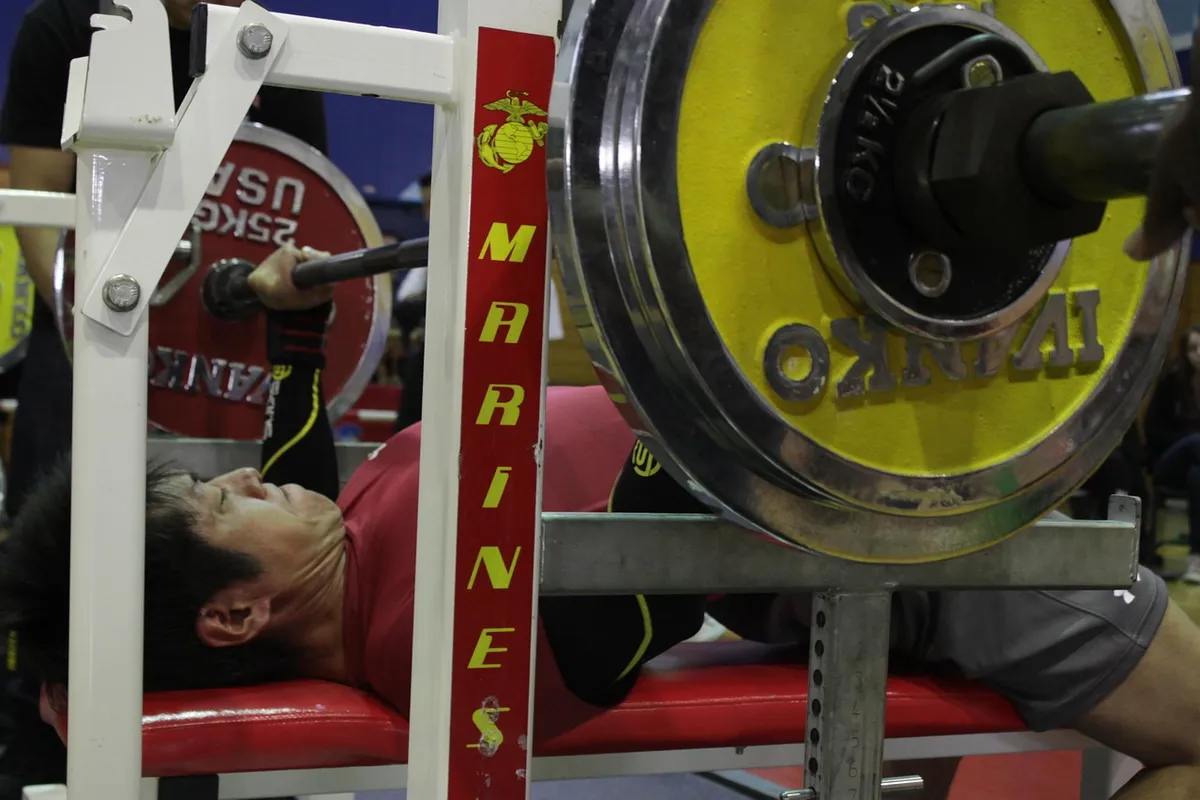
A flat weight bench with a padded top in a home gym
A flat bench with a firm pad, the simplest and most rigid design for pressing and rows.

Stability and footprint

A bench must not rock, twist or slide. Stability comes from a wide base, a heavy frame and rubber feet. A wide footprint at the front and rear stops the bench tipping sideways when you push unevenly, which is common with dumbbells because one arm often moves ahead of the other. A narrow base is a hazard.

Check the frame tubing: thicker steel, usually stated as a gauge, and welded joints beat bolted thin tubing. Look at the feet: rubber end caps grip the floor, and adjustable levelling feet fix wobble on an uneven surface. Put the bench on a rubber mat, which protects the floor and stops sliding. When assembling, tighten all bolts fully and recheck after a few sessions, since vibration loosens them.

Weight is a guide. A very light bench is easy to move but may be unstable under load. A heavier one stays put, but is awkward to shift. Some benches have transport wheels, which let you tilt and roll them away. For a bench you plan to press heavy dumbbells on, stability matters more than portability.

Adjustment mechanisms

The backrest angle is set by a pin, a ratchet or a gas strut. Pin systems are simple and strong but slow, and you must hold the weight of the pad as you move the pin. Ratchet systems, with a lever, are faster and let you change the angle without removing the pin, and the best of them lock firmly. Gas strut systems are smooth but depend on the strut.

The main concern is whether the setting stays put under load. Check owner feedback for complaints about the backrest slipping, a ratchet jumping teeth, or a pin bending. A pin that fits snugly in a thick steel plate is reassuring. Look for a seat that adjusts too, since a seat angled up slightly stops you sliding down the bench on an incline. Fine adjustment, with several settings between flat and upright, lets you find an angle that suits your shoulders, since a very steep incline can be hard on them.

Test the adjustment with the bench empty before using it loaded. Set the angle, push down on the pad with your hands, and check there is no movement. Repeat the check from time to time, because wear and loosening happen slowly.

Decline safety

A decline position puts your head below your hips, and it changes how the load sits and how you get on and off the bench. It needs foot or leg rollers to hold you in place, and without them you can slide down the bench as you press. Getting on and off a steep decline with a heavy load in hand is awkward, and a fall at that moment is a risk.

If you plan to use decline, check that the leg rollers are padded, adjustable and firmly attached, and that the bench's rated capacity covers the decline position. Many people skip decline altogether, since flat and incline cover most needs, and a decline press can be replaced by dips or a flat press with a slight arch. Anyone with a heart condition, high blood pressure or eye problems should ask a doctor before training with the head lower than the hips, because the position changes blood flow to the head. This guide cannot advise on a medical condition.

Storage and folding

A bench is long, usually about 120 cm to 140 cm, and takes floor space even when not in use. Folding benches reduce this, tilting up or folding at the middle so that they slide behind a door or into a corner. Check the folded footprint, the weight, and whether the folding mechanism locks securely in both positions, since a bench that folds unexpectedly under load is dangerous.

Transport wheels make moving a folded bench easy. If you share space with a car or a bed, measure the stored size before buying. Do not store a bench in a damp place, since moisture corrodes steel and rots padding stitching. A cover protects it from dust, and wiping the pad after each session with a damp cloth prolongs its life. Check bolts monthly, and tighten as needed.

Pair the bench with the right weights. Our guides on adjustable versus fixed dumbbells and choosing dumbbell weight explain what to buy to use it, and the wider Health and Fitness section has more equipment guides.

Using a bench safely

Get the weights into position carefully. With dumbbells, sit on the end of the bench with the weights on your thighs, then lie back and kick the dumbbells up one at a time. Reverse the sequence at the end of the set, bringing the weights back to your thighs before you sit up. Dropping them from overhead is hard on the bench and a risk to you.

Keep your feet flat on the floor, your shoulder blades set against the pad and your head on the bench. Use a weight you can control, with a couple of repetitions in reserve, and consider a training partner or a spotter when pushing hard. Choose a load that does not require you to arch your back off the pad. Stop if you feel sharp pain in the shoulders, neck or back, and see a physiotherapist or doctor if it persists.
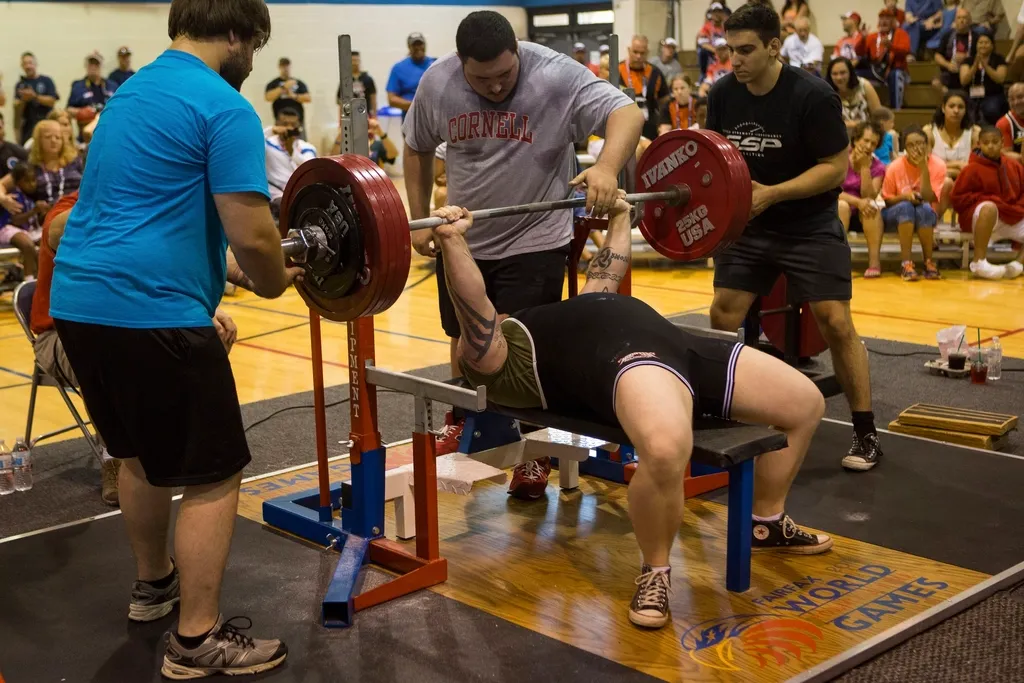
A person lying on a bench pressing dumbbells overhead
A dumbbell press on a bench, where a stable pad and a firm backrest keep the load under control.

What a bench lets you do

The reason to own a bench is the exercises it unlocks, and it helps to count them before you pay for more positions. On a flat setting you can press dumbbells for the chest, row one arm at a time with the other hand and knee on the pad, do hip thrusts with your upper back on the edge, and perform dumbbell pullovers. Set to a low incline of around 30 degrees you shift some of the press toward the upper chest, and at a steep incline near 60 to 70 degrees the press becomes more of a shoulder exercise.

Upright at 90 degrees, the bench becomes a seat with back support for overhead presses, curls and lateral raises. Set to a slight incline, it also works for chest supported rows, where you lie face down on the pad and pull dumbbells toward your ribs, which takes the lower back out of the movement. Off the bench, the same frame serves for step ups, Bulgarian split squats with the rear foot on the pad, and seated or incline core work. A bench that allows a good range of angles with solid locking therefore replaces several pieces of equipment.

Check the practical details that affect these exercises. A bench with a long, narrow nose lets you sit and swing dumbbells into place without hitting a wide front frame. A bench with a very wide front leg may block your feet in a split squat. Look at the end of the bench: a rounded, well finished edge is gentler for hip thrusts than a sharp one. These details never appear in a headline spec, yet they decide whether the bench suits your routine.

Non-obvious failures to check for

The most overlooked failure is the pad stitching and the vinyl. Cheap covers split along the seam after a few months of sweat, and the foam underneath absorbs moisture and smells. Look for a pad with reinforced stitching, a wipeable surface and a firm foam density. A second failure is slow bolt loosening, which makes a bench creep from solid to wobbly over weeks without any single moment you can notice. Tighten the bolts regularly, and consider thread locking compound on the main frame bolts if the manufacturer allows it.

A third failure is the backrest locking pin wearing its hole oval, which lets the pad rock. Look at the plate thickness around the pin holes, since thin plate wears fast. A fourth is a bench that is tall for its width: it can tip sideways when one arm presses harder than the other, so check the footprint against the height. Finally, check the floor beneath. A bench on carpet can sink unevenly, and on polished floors it can slide, so a firm rubber mat is the right surface in either case.

If floor space is the limit, a bench plus a set of resistance bands gives a surprisingly complete home setup for very little room.

Frequently asked questions

Do I need an FID bench or is adjustable enough?

For most people, a flat and incline bench is enough. Decline work is a niche movement, adds complexity and risk, and can be replaced by other exercises. Buy FID only if you will actually use the decline.

Does the weight capacity include my body weight?

It depends on the maker, and there is no standard. Assume it does unless the listing says otherwise, add your weight to your heaviest load and leave a margin.

Why does my bench wobble?

The floor may be uneven, the bolts may be loose, or the frame may be too light. Level the feet, tighten all bolts, and use a mat. A wobble that persists suggests a poor design.

How wide should the pad be?

Around 25 to 30 cm is typical for a good bench. Narrower pads leave the shoulder blades unsupported, and wider ones get in the way of arm movement. Choose firm padding over soft.

Is it safe to use a bench without a spotter?

With dumbbells, yes if you choose a controllable weight and can safely bring the weights down to your thighs. Heavy sets taken to failure are safer with a partner. Stop a rep early rather than risk a stuck weight.

The bottom line

Buy the most stable bench you can afford, with a rated capacity comfortably above your body weight plus your heaviest load. A flat and incline adjustable bench covers most needs, a flat bench is cheaper and sturdier, and FID is worth it only if you will use the decline.

Check pad width, gaps, the adjustment mechanism and the footprint, put it on a mat, and recheck the bolts. Use a controlled weight, get the dumbbells in and out of position carefully, and see a professional if you have a health concern.

Image credits

  • adjdb-fixed-rack.webp: stevepb, Pixabay Content License, source via Pixabay
  • adjdb-spinlock-pair.webp: Arcaion, Pixabay Content License, source via Pixabay
  • adjdb-pair-floor.webp: stevepb, Pixabay Content License, source via Pixabay
  • airfryer-2020-unit.webp: vaxey44972, Pixabay Content License, source via Pixabay
  • airfryer-interior-basket.webp: planet_fox, Pixabay Content License, source via Pixabay
  • airfryer-tabletop-convection.webp: Bagoto, CC BY-SA 4.0, source via Openverse
  • bat-drill-pack.webp: bluebudgie, Pixabay Content License, source via Pixabay
  • bat-ryobi-5ah.webp: Alexei_other, Pixabay Content License, source via Pixabay
  • btcodec-wireless-headphones.webp: vinny1987, Pixabay Content License, source via Pixabay
  • brushless-cordless-drill.webp: dreimarkfuffzig, Pixabay Content License, source via Pixabay
  • brushless-drill-driving-screw.webp: Bru-nO, Pixabay Content License, source via Pixabay
  • sawblade-carbide-teeth-closeup.webp: annawaldl, Pixabay Content License, source via Pixabay
  • sawblade-circular-saw-blade-teeth.webp: jeanvdmeulen, Pixabay Content License, source via Pixabay
  • sawblade-cordless-circular-saw.webp: PfenningMassivholzmoebel, Pixabay Content License, source via Pixabay
  • impact-driver-hex-collet.webp: Mark Hunter, CC BY 2.0, source via Wikimedia Commons
  • foamroller-row-densities.webp: Pexels, Pixabay Content License, source via Pixabay
  • foamroller-thigh-use.webp: Pexels, Pixabay Content License, source via Pixabay
  • foamroller-back-use.webp: Pexels, Pixabay Content License, source via Pixabay
  • hose-coiled-green.webp: Ralphs_Fotos, Pixabay Content License, source via Pixabay
  • hose-nozzle-spray.webp: manfredrichter, Pixabay Content License, source via Pixabay
  • hose-reel-storage.webp: RyanMcGuire, Pixabay Content License, source via Pixabay
  • grillchoice-gas-charcoal-side.webp: pixel2013, Pixabay Content License, source via Pixabay
  • grillchoice-charcoal-kettle.webp: adonyig, Pixabay Content License, source via Pixabay
  • grillchoice-gas-burners.webp: RAMillu, Pixabay Content License, source via Pixabay
  • anc-over-ear-headphones.webp: rupixen, Pixabay Content License, source via Pixabay
  • anc-headphones-over-ear.webp: terydanphiri, Pixabay Content License, source via Pixabay
  • anc-earbuds-case.webp: MUSIC_AND_WALLPAPER, Pixabay Content License, source via Pixabay
  • yogamat-rolled-studio.webp: pixelcreatures, Pixabay Content License, source via Pixabay
  • yogamat-cork-surface.webp: lograstudio, Pixabay Content License, source via Pixabay
  • yogamat-practice-pose.webp: StockSnap, Pixabay Content License, source via Pixabay
  • bits-sds-set.webp: blickpixel, Pixabay Content License, source via Pixabay
  • bits-gold-twist.webp: Life-Of-Pix, Pixabay Content License, source via Pixabay
  • bits-aluminium-oil.webp: blickpixel, Pixabay Content License, source via Pixabay
  • dumbbell-rack-rows.webp: anncapictures, Pixabay Content License, source via Pixabay
  • dumbbell-curl-rack.webp: markusspiske, Pixabay Content License, source via Pixabay
  • dumbbell-hand-grip.webp: Engin_Akyurt, Pixabay Content License, source via Pixabay
  • descale-hamilton-maker.webp: andrew welch, CC0, source via Openverse
  • descale-limescale-pot.webp: MuhamadIksan, Pixabay Content License, source via Pixabay
  • descale-espresso-jimmyweee.webp: 2857440, Pixabay Content License, source via Pixabay
  • castiron-skillet-seasoned-surface.webp: ponce_photography, Pixabay Content License, source via Pixabay
  • castiron-skillet-on-hob.webp: ponce_photography, Pixabay Content License, source via Pixabay
  • shears-bypass-pair.webp: Ray_Shrewsberry, Pixabay Content License, source via Pixabay
  • shears-blade-sharpening.webp: CarlottaSilvestrini, Pixabay Content License, source via Pixabay
  • shears-pruning-cut.webp: schraubgut, Pixabay Content License, source via Pixabay
  • humidifier-cool-mist-unit.webp: asundermeier, Pixabay Content License, source via Pixabay
  • humidifier-ultrasonic-mist.webp: Tiluria, Pixabay Content License, source via Pixabay
  • cooktop-induction-pan.webp: MrWashingt0n, Pixabay Content License, source via Pixabay
  • cooktop-gas-burners-flame.webp: ferarcosn, Pixabay Content License, source via Pixabay
  • mower-rotary-lawn-cut.webp: congerdesign, Pixabay Content License, source via Pixabay
  • mower-cordless-battery.webp: ClickerHappy, Pixabay Content License, source via Pixabay
  • mower-robotic-lawn.webp: MonikaP, Pixabay Content License, source via Pixabay
  • blower-backpack-yard.webp: ClickerHappy, Pixabay Content License, source via Pixabay
  • monitor-gaming-desk.webp: StartupStockPhotos, Pixabay Content License, source via Pixabay
  • monitor-curved-display.webp: PublicDomainPictures, Pixabay Content License, source via Pixabay
  • monitor-dual-screen-setup.webp: StartupStockPhotos, Pixabay Content License, source via Pixabay
  • powerbank-capacity-pair.webp: StockSnap, Pixabay Content License, source via Pixabay
  • powerbank-two-units-cable.webp: aiiapromogifts, Pixabay Content License, source via Pixabay
  • powerbank-phone-charging.webp: aiiapromogifts, Pixabay Content License, source via Pixabay
  • raisedbed-cedar-vegetables.webp: planet_fox, Pixabay Content License, source via Pixabay
  • raisedbed-steel-garden.webp: AndreasGoellner, Pixabay Content License, source via Pixabay
  • raisedbed-brick-stone.webp: Farbsynthese, Pixabay Content License, source via Pixabay
  • bands-loop-set-colours.webp: SpencerWing, Pixabay Content License, source via Pixabay
  • robotvac-suction-floor.webp: HOCKULUS, Pixabay Content License, source via Pixabay
  • robotvac-brush-underside.webp: NickyPe, Pixabay Content License, source via Pixabay
  • robotvac-hard-floor-clean.webp: ed_rsnhr, Pixabay Content License, source via Pixabay
  • smarthome-hub-and-sensors.webp: finnhart, Pixabay Content License, source via Pixabay
  • ssd-and-hdd-side-by-side.webp: bohed, Pixabay Content License, source via Pixabay
  • ssd-sata-2-5-inch.webp: blickpixel, Pixabay Content License, source via Pixabay
  • ssd-hard-disk-interior.webp: wir_sind_klein, Pixabay Content License, source via Pixabay
  • pans-three-materials.webp: Unknown, CC0, source via Openverse
  • treadmill-running-belt.webp: lewisgoodphotos, Pixabay Content License, source via Pixabay
  • treadmill-console-belt.webp: Rattakarn_, Pixabay Content License, source via Pixabay
  • grillgrate-drip-tray.webp: pixel2013, Pixabay Content License, source via Pixabay
  • umbrella-market-patio-table.webp: schaerfsystem, Pixabay Content License, source via Pixabay
  • umbrella-cantilever-offset.webp: ClickerHappy, Pixabay Content License, source via Pixabay
  • umbrella-closed-base.webp: Unknown, CC0, source via Openverse
  • level-cross-line-laser-wall.webp: Billbeee at English Wikipedia, CC BY 2.5, source via Openverse
  • level-bubble-vial.webp: Didgeman, Pixabay Content License, source via Pixabay
  • bench-fid-flat-incline.webp: 12019, Pixabay Content License, source via Pixabay
  • bat-contacts.webp: bluebudgie, Pixabay Content License, source via Pixabay
  • btcodec-phone-and-earbuds.webp: Firmbee, Pixabay Content License, source via Pixabay
  • btcodec-over-ear-wireless.webp: HOerwin56, Pixabay Content License, source via Pixabay
  • brushless-drill-motor-parts.webp: Alexei_other, Pixabay Content License, source via Pixabay
  • impact-driver-and-drill-pair.webp: Bru-nO, Pixabay Content License, source via Pixabay
  • impact-driver-decking-screw.webp: PublicDomainPictures, Pixabay Content License, source via Pixabay
  • bike-spin-saddle.webp: musculacaoMM2020, Pixabay Content License, source via Pixabay
  • grillgrate-cast-iron-clean.webp: pixel2013, Pixabay Content License, source via Pixabay
  • grillgrate-brush-hot.webp: 4666192, Pixabay Content License, source via Pixabay
  • humidifier-evaporative-wick.webp: asundermeier, Pixabay Content License, source via Pixabay
  • iprating-water-droplets-device.webp: AS_Photography, Pixabay Content License, source via Pixabay
  • level-rotary-tripod.webp: jarmoluk, Pixabay Content License, source via Pixabay
  • blower-leaf-pile.webp: ClickerHappy, Pixabay Content License, source via Pixabay
  • massagegun-thigh-use.webp: Surprising_Media, Pixabay Content License, source via Pixabay
  • mesh-wifi-node-on-shelf.webp: jeanvdmeulen, Pixabay Content License, source via Pixabay
  • mesh-wifi-node-pair.webp: dmitrochenkooleg, Pixabay Content License, source via Pixabay
  • mesh-wifi-ceiling-access-point.webp: wishedcn0, Pixabay Content License, source via Pixabay
  • multitool-plunge-cut-wood.webp: neelam279, Pixabay Content License, source via Pixabay
  • multitool-flush-cut.webp: powertools, Pixabay Content License, source via Pixabay
  • multitool-blades-set.webp: jeanvdmeulen, Pixabay Content License, source via Pixabay
  • outdoormat-patio-table-set.webp: KarenJubinville, Pixabay Content License, source via Pixabay
  • outdoormat-teak-bench.webp: rhyslud, Pixabay Content License, source via Pixabay
  • outdoormat-wicker-chairs.webp: 1139623, Pixabay Content License, source via Pixabay
  • bands-tube-handles.webp: SpencerWing, Pixabay Content License, source via Pixabay
  • smarthome-smart-plug-wall.webp: finnhart, Pixabay Content License, source via Pixabay
  • pans-stainless-clad-skillet.webp: ujrzanow194, Pixabay Content License, source via Pixabay
  • pans-cast-iron-skillet.webp: fotoblend, Pixabay Content License, source via Pixabay
  • torquewrench-click-socket.webp: stevepb, Pixabay Content License, source via Pixabay
  • treadmill-motor-hood.webp: FitnessStore112, Pixabay Content License, source via Pixabay
  • usbc-charger-cable.webp: C10Maj, Pixabay Content License, source via Pixabay
  • usbc-wall-charger.webp: viarami, Pixabay Content License, source via Pixabay
  • usbc-cables-connectors.webp: ReadyElements, Pixabay Content License, source via Pixabay
  • bench-flat-pad.webp: 12019, Pixabay Content License, source via Pixabay
  • bench-dumbbell-press.webp: Unknown, CC0, source via Openverse
  • bike-indoor-cycling-row.webp: musculacaoMM2020, Pixabay Content License, source via Pixabay
  • castiron-seasoned-skillet.webp: u_uiv44oi92w, Pixabay Content License, source via Pixabay
  • cooktop-induction-surface.webp: Fxq19910504, Pixabay Content License, source via Pixabay
  • iprating-phone-in-water.webp: AS_Photography, Pixabay Content License, source via Pixabay
  • washer-patio-cleaning.webp: Mosatsu, CC BY-SA 4.0, source via Openverse
  • dehumidifier-portable-unit.webp: Amazon product image, Product image, source via Amazon
  • hepa-kowa-filter.webp: Amazon product image, Product image, source via Amazon
  • cadr-purifier-core300.webp: Amazon product image, Product image, source via Amazon
  • studfinder-handheld-scanner.webp: Amazon product image, Product image, source via Amazon
  • rower-air-flywheel-gym.webp: Amazon product image, Product image, source via Amazon
  • wifi-router-antennas.webp: Amazon product image, Product image, source via Amazon
  • sandpaper-grit-sheets.webp: BRRT, Pixabay Content License, source via Pixabay
  • dehumidifier-product-1.webp: Amazon product image, Product image, source via Amazon
  • dehumidifier-product-2.webp: Amazon product image, Product image, source via Amazon
  • hepa-product-1.webp: Amazon product image, Product image, source via Amazon
  • hepa-product-2.webp: Amazon product image, Product image, source via Amazon
  • cadr-product-1.webp: Amazon product image, Product image, source via Amazon
  • cadr-product-2.webp: Amazon product image, Product image, source via Amazon
  • studfinder-product-1.webp: Amazon product image, Product image, source via Amazon
  • studfinder-product-2.webp: Amazon product image, Product image, source via Amazon
  • massagegun-product-1.webp: Amazon product image, Product image, source via Amazon
  • washer-product-1.webp: Amazon product image, Product image, source via Amazon
  • washer-product-2.webp: Amazon product image, Product image, source via Amazon
  • rower-product-1.webp: Amazon product image, Product image, source via Amazon
  • rower-product-2.webp: Amazon product image, Product image, source via Amazon
  • smarthome-product-1.webp: Amazon product image, Product image, source via Amazon
  • torquewrench-product-1.webp: Amazon product image, Product image, source via Amazon
  • torquewrench-product-2.webp: Amazon product image, Product image, source via Amazon
  • wifi-product-1.webp: Amazon product image, Product image, source via Amazon
  • wifi-product-2.webp: Amazon product image, Product image, source via Amazon
  • iprating-wet-smartwatch.webp: indraprojects, Pixabay Content License, source via Pixabay
  • bike-alt-rower-1.webp: Amazon product image, Product image, source via Amazon
  • bands-alt-dumbbell-1.webp: Amazon product image, Product image, source via Amazon
  • sandpaper-drill-1.webp: Amazon product image, Product image, source via Amazon
  • sandpaper-drill-2.webp: Amazon product image, Product image, source via Amazon

Related Guides