A rack of ten pairs of dumbbells takes roughly the floor space of a small wardrobe, and the cost of buying each pair adds up quickly, which is exactly the problem adjustable dumbbells set out to solve. One pair, one footprint, many weights. The pitch is appealing, and for many home gyms it is the right answer. But the compromise is real, and it shows up in the middle of a workout, when you are waiting to change the load while your rest period ticks over.
This guide compares the two on the points that matter in daily use: how the mechanisms work, how fine the increments are, how much room they take, how quickly you can change weight, how well they survive being dropped, how the handle feels, and what happens to resale value. It ends with a plain recommendation by type of buyer.
How adjustable mechanisms work
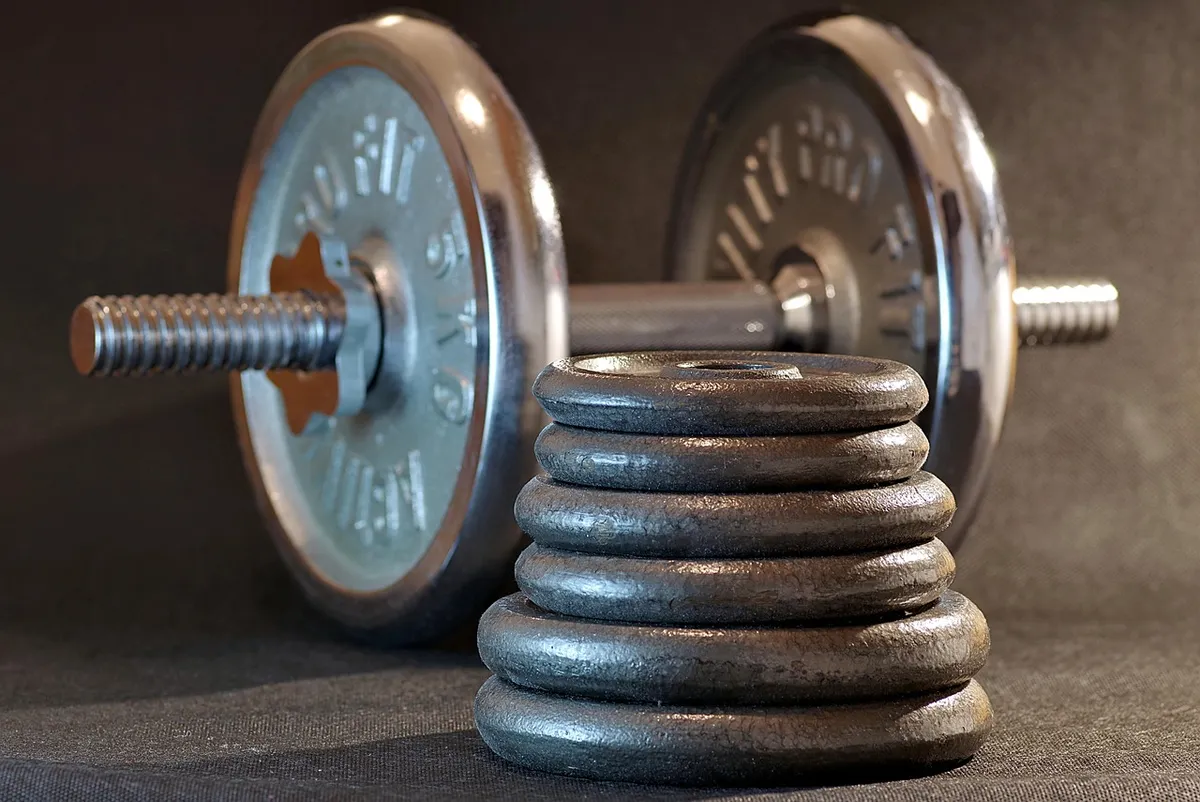
There are three common mechanisms. A dial system, found on the compact models that sit in a cradle, uses a rotating selector. You turn the dial to a number, lift the handle out of the cradle, and only the plates matching that setting come with it while the rest stay behind. It is the fastest method on offer, often taking a second or two per change.
A pin or selector system uses a metal pin that slides into a slot on a stack of plates. You pull the pin, move it to the desired weight, and lift. This is the same principle as a cable machine's weight stack, and it is quick and tidy, with a design that spreads the load across several plates. A spin-lock system is the oldest design: a threaded handle with removable plates held in place by collars you screw on. It is the slowest to change and the cheapest, and it is the system most associated with the cheaper sets sold as part of a barbell bundle.
Each system trades speed for simplicity. Dials and pins are quick but contain moving parts that can wear or jam, and the weight increments are fixed by the plate arrangement. Spin-lock sets have the fewest parts but invite impatience, because loosening and tightening collars on both dumbbells between exercises takes a minute or two. Collars can also work loose mid set if they are not fully tightened, which is a safety issue rather than just an annoyance.
| Feature | Fixed | Dial or pin adjustable | Spin-lock adjustable |
|---|---|---|---|
| Change time | None, pick up another pair | A few seconds | One to two minutes |
| Footprint for a full range | Large, needs a rack | Small, a cradle each | Small, plates stack on a tray |
| Typical increment | Set by the pairs you buy | Fixed steps, often 2 kg or 5 lb | Fine, depends on plate sizes |
| Durability | Very high | Moving parts can wear | Collars and threads can loosen |
| Cost for a wide range | Highest | Mid to high | Lowest |
Increments and the minimum weight
The increment is the step between one available weight and the next. Many fixed ranges go up in steps of 2 kg or 5 lb at the lighter end and 2.5 kg or 5 lb at heavier ones. Dial systems often use steps of a similar size across a wide range, sometimes 2 kg per step, and some budget models jump by larger amounts at higher weights. Spin-lock sets can be the finest of the three, because you can add small plates in small fractions, but at the cost of the effort of doing so.
The minimum weight deserves as much attention as the maximum. Some adjustable models start at a weight well above what a beginner needs for lateral raises or curls, which is a quiet flaw that product pages do not highlight. Check the lowest setting in the specification, not just the headline figure, and consider whether a light fixed pair or resistance bands should supplement the set. Our guide to choosing dumbbell weight explains why small muscle groups need very different loads from large ones.
Step size matters at the top end too. A jump of 5 lb or 2.5 kg when your lateral raise sits at 8 kg is a big percentage increase, and fixed pairs will have the same problem. The difference is that with fixed pairs you chose the intervals when you bought them, whereas an adjustable set locks in the manufacturer's choice.
Footprint and storage
Space is where adjustable sets win decisively. A pair of dial dumbbells with their cradle occupies a space roughly the size of a shoebox each, and replaces what would otherwise be a long rack. For a living room, spare bedroom or apartment, that is the difference between having a home gym and not having one. They store neatly under a table or in a corner, and the cradle keeps them stable on the floor.
Fixed dumbbells need a rack or at least a clear stretch of floor, and the weight of a full rack is considerable. A rack of ten pairs can load a floor significantly, which matters on upper floors of older buildings, though a normal residential floor is designed to cope with typical home gym equipment. If you have concerns about floor loading, ask a builder or building manager rather than relying on a buying guide, since no general figure applies to every home. Rubber mats under either type protect floors from damage and noise.
Change speed between sets
The cost of an adjustable set is time. With a fixed pair, you put one down and pick another up. With a dial or pin system, you set the weight on both dumbbells, which takes several seconds. With spin locks, you undo collars, slide plates, and re-tighten, which can take longer than the rest period you wanted.
This matters most in training styles that change weight often. Supersets, drop sets and circuits, where you move from one exercise to another with little rest, are awkward on slower mechanisms. A drop set, which reduces weight in stages without rest, can be impractical with a spin lock set. For straight sets with a normal two minute rest, a dial or pin set is fast enough that you barely notice. If you follow a routine that changes weights every set, consider fixed pairs for the weights you change most, and use the adjustable pair for the rest.
Another subtle point is that changing weights while tired is when mistakes happen. A pin placed incompletely, a dial not seated fully, or a collar not tight can all cause a plate to shift or drop. Make a habit of lifting the handle gently to confirm that the correct plates come with it before you start the set, and tug the plates to check they are secure.
Durability and the drop risk
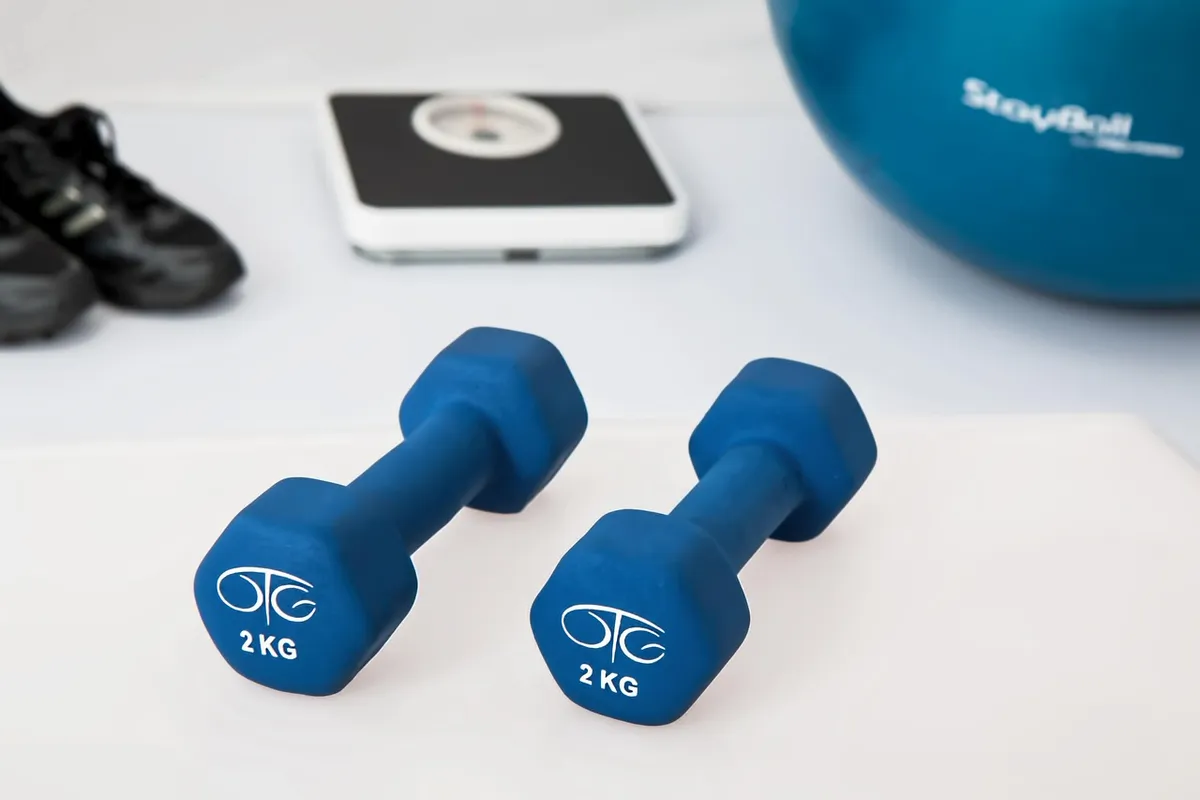
Fixed dumbbells are very hard to break. Rubber coated and cast iron designs tolerate being set down heavily and, in most cases, being dropped from knee height onto a mat. They have no moving parts, so they work the same after years of use.
Adjustable systems have mechanisms that can wear out, and dropping them is a bigger risk. A hard drop can crack plastic cradle parts, bend a pin, damage the selector, or crack a plate. Many manufacturers advise against dropping their dumbbells at all and state that in the manual. If your training involves dropping weights at the end of hard sets, for instance during heavy pressing from a bench, fixed pairs are the safer choice. Lifting adjustable dumbbells back to the floor under control is a good habit regardless.
Warranty terms differ, and no published standard covers how long an adjustable mechanism should last. Look for a warranty of several years on the mechanism, check whether replacement parts are sold, and read owner feedback for patterns of failure, such as pins that stick or dials that loosen. A brand that sells spare plates and selectors is easier to live with than one that does not.
Handle length and feel
Adjustable dumbbells often have longer handles than fixed ones of the same weight, because the plates and mechanism take up space at both ends of the handle. The extra length can make the dumbbell feel unwieldy in movements like the goblet squat, and it can bump your forearms or thighs in movements where the dumbbells travel close to the body, such as lunges or the bottom of a press.
The handle's diameter and knurling matter for grip, too. Aggressive knurling can chafe the hands over a long session, while a smooth handle slips with sweat. Some adjustable models use plastic or rubber grips, others use knurled steel. Compare the overall length of the dumbbell at its lightest and heaviest settings, since it changes. At light settings some designs carry a long stretch of empty handle, which makes the weight feel unbalanced for exercises such as lateral raises.
If you plan to bench press, the width of the dumbbell matters because it sets how far back you can lower it and how it sits against your shoulders. An adjustable set that is wider than a fixed one may feel awkward in tight spaces, and it also affects how easily you can get the weights into position, a step that benefits from a proper stable surface, so see our weight bench guide.
Cost and resale value
Buying a full range of fixed dumbbells costs substantially more than one adjustable pair, which is the main reason adjustable sets sell. The comparison changes if you only need two or three weights, because then a few fixed pairs can cost about the same or less. Calculate the number of weights you will use over the next year, rather than the total range a set offers, before deciding that adjustable is cheaper.
Resale value favours fixed pairs. They keep their function indefinitely, are simple to assess, and sell easily because buyers can see exactly what they are getting. Adjustable sets sell less easily, in part because buyers worry about the condition of the mechanism, and the market is fragmented across many designs. Parts availability affects value too: a popular model with spare parts available holds value better than an obscure one. Do not plan to recover the purchase price in all cases, and see an adjustable set as equipment to use rather than an asset.
Checks before you buy an adjustable set
Start with the weight range and the step size, then work backwards to your plan. If your heaviest planned goblet squat is well above the set's maximum, you will outgrow it within a year, and a set that tops out low is a poor long term purchase. Check how many weights the set actually offers, because a stated maximum can hide large jumps between settings at the heavy end.
Next look at the cradle. A cradle is not just storage, it is part of the mechanism on dial and pin designs, so a flimsy plastic cradle is a weak point. It should sit flat without rocking, hold both dumbbells without slipping, and be sized so you can load and unload without scraping your knuckles. A cradle that tips when you lift one dumbbell is a nuisance in daily use.
Finally, check the return and spare parts policy. A mechanism that sticks in the first month is easier to resolve with a retailer that accepts returns, and a brand that sells replacement plates, pins and dials is easier to live with over years. Owner feedback is useful here, as patterns in what breaks tell you more than the product page does. Weight in a heavy box is also expensive to ship back, so test the set promptly after delivery with a few light reps at each setting.
If your situation is different
In a shared household, an adjustable set avoids arguments about whose weights are in the way, but make sure everyone understands the mechanism, since a plate left half engaged is a hazard. If a teenager or a beginner will use the set unsupervised, a simple, well labelled dial is safer than a spin lock with loose plates lying around.
For someone working around a physical limitation, such as a wrist that dislikes a thick handle, the handle diameter can matter more than the mechanism. Fixed dumbbells come in many handle diameters, whereas an adjustable model gives you one. A physiotherapist can advise on grip and load if you have a condition affecting the hands, wrists or shoulders, and this is a decision for a professional, not a buying guide.
If you train outdoors or in a damp garage, remember that adjustable mechanisms have more places for moisture to collect. Rust on pins and selectors can stiffen the action, so dry them after use and keep them off bare concrete. Fixed cast iron needs less care, though it can rust at the surface too, which a wipe and a light oil coat will manage.
Who each type suits
Adjustable dumbbells suit people with limited space, people who share equipment with a partner or family at different strengths, and people who train alone with straight sets and want a wide weight range from a single purchase. They are also a good starting point for beginners who do not yet know which weights they will use.
Fixed dumbbells suit people who train quickly, use circuits or drop sets, do heavy bench or overhead pressing where dropping is a risk, or have the space and budget for a rack. They also suit households with children or pets, because there is nothing to loosen or misplace. If you cannot decide, a compromise works: one adjustable pair for the main compound lifts and a light fixed pair for shoulder and arm isolation. For extra variety at low cost, resistance bands fill the gaps between increments. More equipment reading is gathered in our Health and Fitness section.
Frequently asked questions
Are adjustable dumbbells as good as fixed ones for building strength?
The weight is the weight, so the training effect is the same. The differences are practical: change speed, handle length, durability and increments. If you can work within those limits, an adjustable set builds strength just as well as a rack of fixed pairs.
Can I drop adjustable dumbbells?
Most manufacturers advise against it. A drop can crack plates, bend pins or damage the selector, and the damage may not be obvious. If your training ends sets with dropped weights, fixed dumbbells are the safer option.
How do I know the weight is secure before I lift?
Lift the handle a few centimetres first and check that the plates you expect have come with it and the rest stay on the cradle. With spin locks, check both collars are tight. Never trust the numeral alone if a mechanism feels loose or stiff.
Which mechanism is best?
Dial and pin systems are the quickest and easiest for most people. Spin locks are the cheapest and finest in increment but slow. Choose by how often you change weight within a session, not by the headline range.
Do I need a rack for fixed dumbbells?
Not strictly, but a rack keeps them tidy and safe. Loose dumbbells on the floor are a trip hazard, and they roll if they are round headed. Hex heads help, and a small rack costs far less than the weights it holds.
The bottom line
If space or budget is tight, buy an adjustable pair with a dial or pin mechanism, check the lowest setting and the handle length, and treat the mechanism with care by lowering the weights rather than dropping them. If you train fast, press heavy or want equipment that never needs thought, buy fixed pairs at the weights you will actually use.
Many home lifters end up with both, an adjustable pair for the main lifts and a few fixed pairs for the movements where speed or small increments matter. Start with the option that fits your room, learn which weights you use, and add to it from there.